Xylanase vs Cellulase vs Hemicellulase: Practical Differences for Industrial Fiber Processing
A technical field guide to how xylanase, cellulase, and broad hemicellulase products differ by substrate target, process effect, risk profile, and purchasing specification.
In industrial fiber processing, the enzyme name matters because it tells you which part of the plant cell wall will move first.
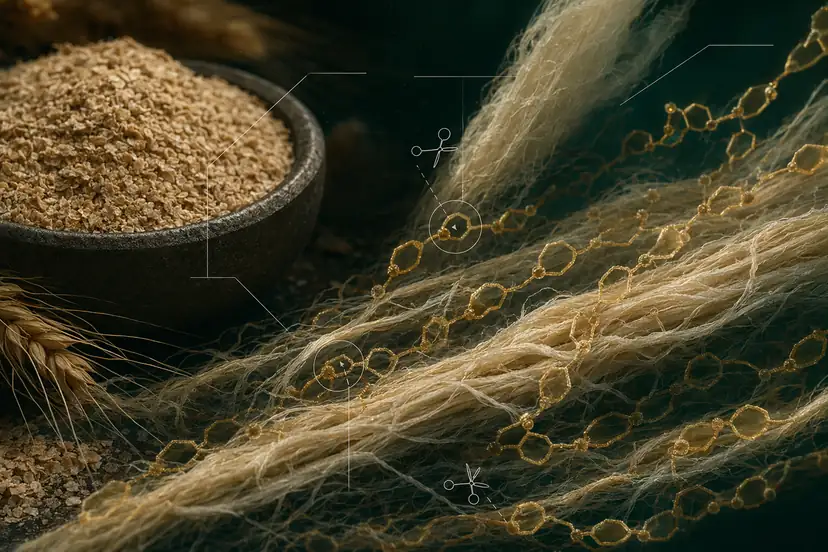
Xylanase — properly, Xylanase (endo-1,4-β-xylanase) — targets xylan, a major hemicellulose backbone found in cereal brans, wood pulp, agricultural residues, and many plant-derived process streams. Its commercial value is usually not “complete fiber destruction.” It is selective opening: lower viscosity, improved drainage, easier extraction, cleaner clarification, and better access for downstream enzymes or process steps.
Cellulase targets cellulose, the crystalline or semi-crystalline glucose-based scaffold that gives plant fiber much of its strength.
Hemicellulase is not one enzyme. It is a category term covering several enzymes that act on hemicelluloses, including xylanase, mannanase, β-glucanase, arabinofuranosidase, and others. Buying “a hemicellulase” without naming the primary activity can lead to unpredictable process results.
This guide explains the difference from a buyer’s point of view: what each enzyme attacks, what it changes in the process, and what to specify before quoting.
Underperformance if the substrate is low in xylan or the xylan is heavily shielded
Cellulase
Cellulose microfibrils
Breaks down structural cellulose, softens fiber, increases glucose release, can improve biomass accessibility
Over-softening, loss of fiber strength, excessive fines, texture damage
Hemicellulase
Broad hemicellulose fraction, depending on composition
Variable; may reduce viscosity or open non-cellulosic polysaccharides
Too vague unless the enzyme profile is specified
If your problem is water-bound cereal fiber, pulp drainage, arabinoxylan viscosity, or selective cell-wall opening, start with xylanase.
If your problem is cellulose breakdown, cellulase is the better primary tool.
If a supplier proposes hemicellulase, ask which hemicellulose bond types and side chains the product is designed to address.
What xylanase does differently
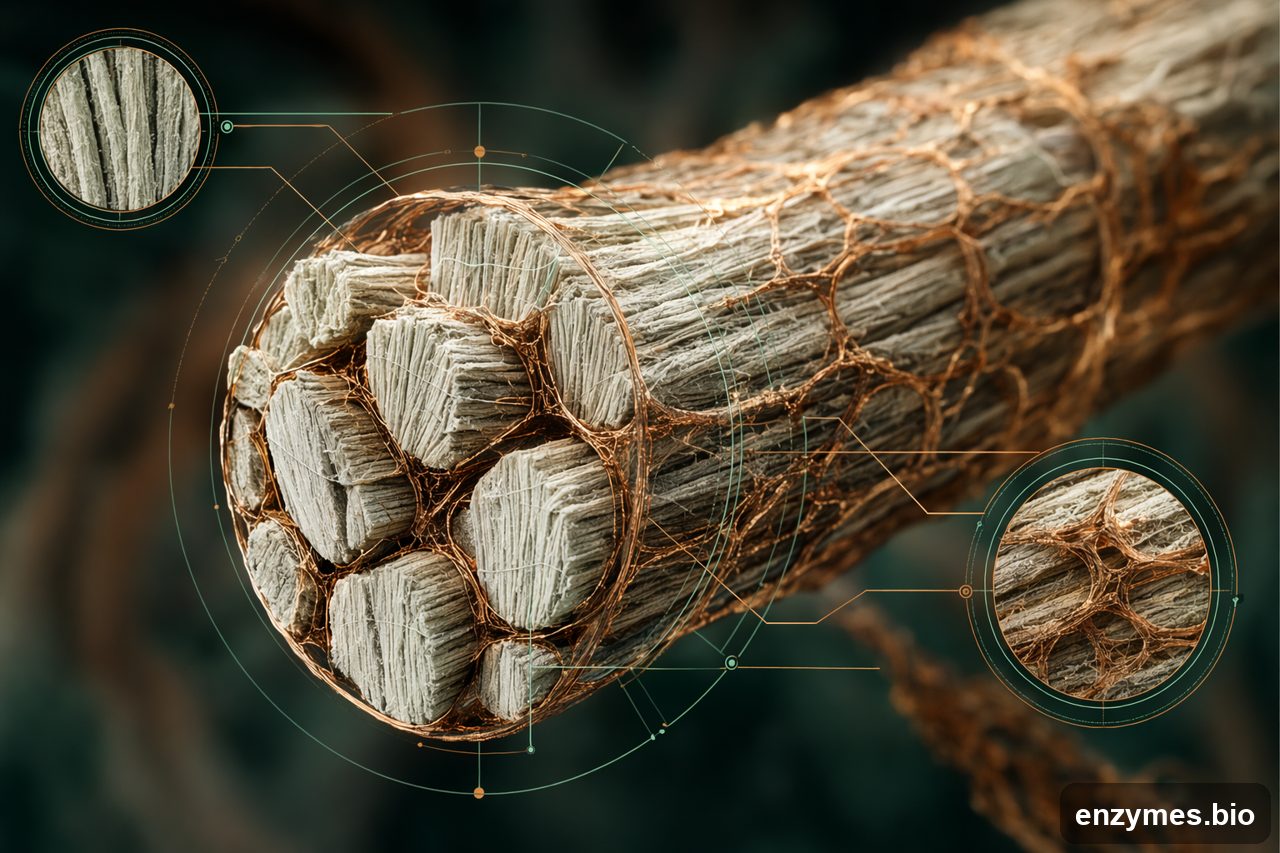
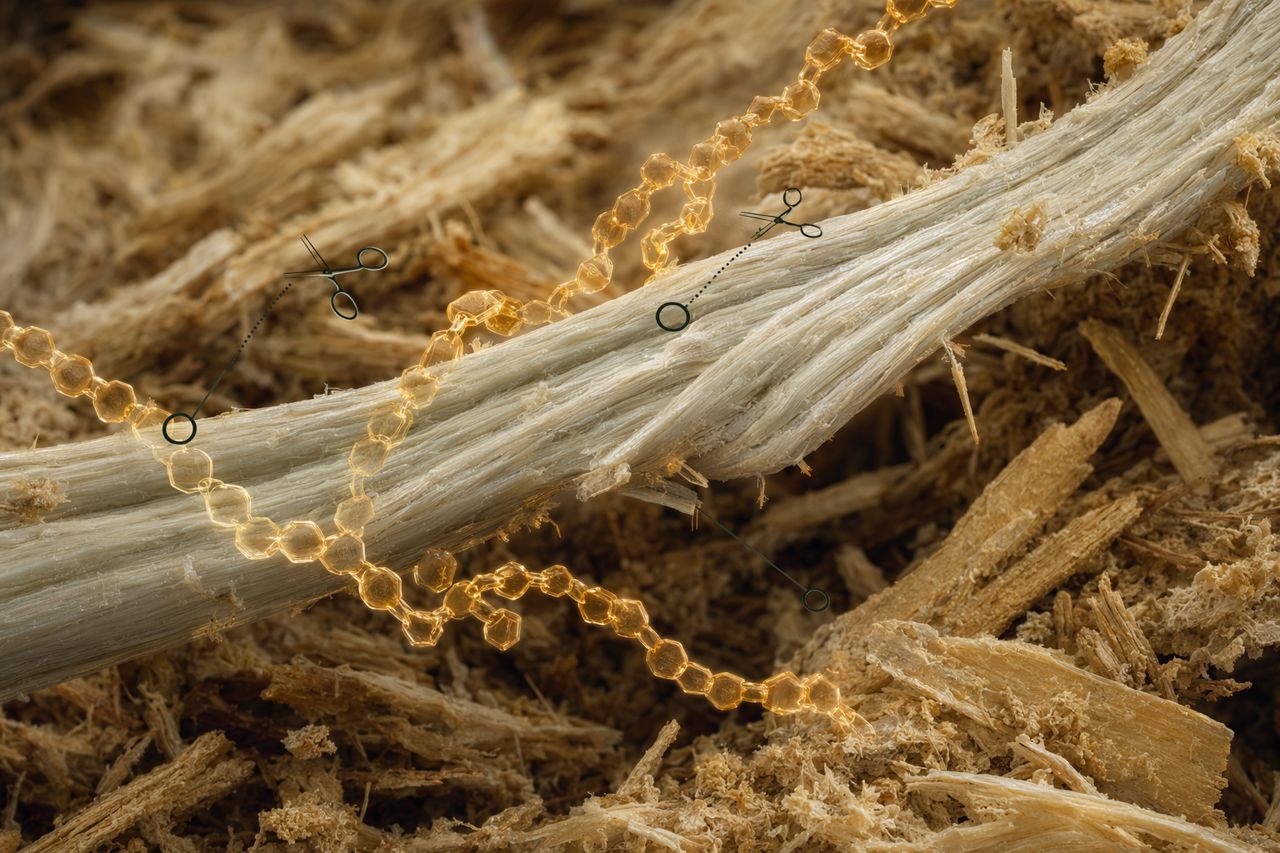
Xylanase cuts internal β-1,4 linkages in the xylan backbone. In practical terms, it loosens the non-cellulosic matrix surrounding cellulose fibers rather than attacking the cellulose scaffold itself.
That selectivity is why xylanase is commonly evaluated when a process needs to:
Reduce viscosity from soluble or swollen arabinoxylans
Improve filtration, pressing, or drainage
Increase extract yield from cereal, bran, or plant material
Improve access for fermentation, saccharification, or downstream treatment
Modify dough or slurry behavior without excessive cellulose degradation
Reduce fiber network resistance in pulp, paper, or biomass streams
The key phrase is selective opening. Xylanase can make a fiber matrix more permeable while preserving more of the cellulose structure than a cellulase-led approach.
What cellulase does differently
Cellulase systems act on cellulose, usually through a combination of endoglucanase, exoglucanase, and β-glucosidase-type functions depending on the product design. In manufacturing terms, cellulase changes the main load-bearing polysaccharide.
That can be desirable when the objective is:
Breaking down cellulosic biomass
Releasing fermentable glucose from cellulose-rich material
Softening plant tissue
Improving pulp fibrillation or textile surface modification
Increasing accessibility in highly cellulosic substrates
But cellulase can be too aggressive when the product needs fiber integrity, controlled texture, or predictable drainage behavior. In those cases, xylanase may offer a cleaner first intervention because it opens the hemicellulose matrix without making cellulose the primary target.
Why “hemicellulase” is a category, not a specification
Hemicellulose is chemically diverse. Xylan, mannan, β-glucan, arabinan, galactan, and side-chain substitutions all behave differently in a process. A product sold as “hemicellulase” may contain one dominant activity or a blended profile.
For procurement and R&D, that means the word alone is not enough.
When reviewing a hemicellulase proposal, ask:
What is the primary substrate target? Xylan, mannan, β-glucan, or a blend?
Is the product designed for backbone cleavage or side-chain removal? These are different functions.
What process outcome is expected? Lower viscosity, higher extraction, improved drainage, sugar release, or texture modification?
What collateral activity is present? Excess cellulase or protease may change product quality.
How narrow or broad is the enzyme profile? A narrow profile can be easier to control; a broad profile can be useful for heterogeneous feedstocks.
For xylan-rich raw materials, a defined xylanase is often easier to evaluate than a generic hemicellulase label.
How to choose the right enzyme for your process
1. Start with the raw material
A xylanase-led trial makes sense when the substrate contains meaningful xylan or arabinoxylan. Common examples include:
Wheat bran and cereal fractions
Rye, barley, and other grain process streams
Corn fiber and agricultural residues
Hardwood pulp and certain non-wood fibers
Plant-based extraction slurries with high water binding
Biomass streams where hemicellulose limits access
A cellulase-led trial makes more sense when the limiting structure is cellulose itself.
A broader hemicellulase blend may be appropriate when the feedstock is mixed, variable, or rich in several non-cellulosic polysaccharides.
2. Define the business outcome
Do not choose an enzyme only by name. Choose it by the manufacturing outcome you need.
Use xylanase when the goal is usually:
Lower slurry viscosity
Faster filtration or pressing
Improved extraction efficiency
Better drainage or dewatering
More open fiber structure with less cellulose attack
Improved process consistency on xylan-rich material
Use cellulase when the goal is usually:
Deeper cellulose conversion
Increased glucose release
Stronger tissue or fiber softening
Structural degradation of cellulose-rich solids
Use a specified hemicellulase blend when the goal is:
Broader hemicellulose modification
Performance across variable feedstocks
Combined backbone and side-chain treatment
3. Watch the risk profile
Every enzyme changes the material in a particular direction.
Xylanase risk: If the feedstock has limited accessible xylan, results may be modest unless pretreatment or a supporting enzyme is used.
Cellulase risk: If the product needs fiber strength, mouthfeel, sheet properties, or particle integrity, cellulase can overshoot.
Generic hemicellulase risk: If the composition is unclear, batch behavior can be hard to interpret and optimize.
The best trials are designed around a measurable process bottleneck: viscosity, filtration time, extract clarity, press yield, drainage response, fermentability, or texture.
Application-specific guidance
Food and grain processing
In cereal streams, arabinoxylans can bind water and raise viscosity. Xylanase can reduce this drag by cutting the xylan backbone, improving handling and separation. Cellulase may be useful in some plant tissue applications, but it can also change texture more strongly than desired.
For grain processors, the key question is: Is the bottleneck soluble arabinoxylan viscosity or structural cellulose?
Brewing, distilling, and fermentation feed preparation
Xylanase can help open xylan-rich grain or biomass matrices, improving liquid-solid separation and access for downstream conversion. If the process is designed for deeper cellulose conversion, cellulase may be paired later or used as part of a broader enzyme strategy.
The sequencing matters. Xylanase first can reduce physical resistance before more aggressive carbohydrate conversion.
Pulp, paper, and fiber modification
In pulp applications, xylanase is valued because it can modify hemicellulose around cellulose fibers. This can improve drainage, brightness response, or chemical accessibility depending on the process design. Cellulase can alter fiber surfaces more directly, which may help or harm depending on strength requirements.
For pulp buyers, the practical distinction is: xylanase opens the hemicellulose matrix; cellulase changes the cellulose surface and structure.
Biomass and agricultural residues
Agricultural residues contain cellulose, hemicellulose, lignin, and extractives in variable ratios. Xylanase can reduce hemicellulose resistance and improve enzyme access. Cellulase is central when cellulose conversion is the main objective. Broad hemicellulase blends may be needed when xylan is not the only barrier.
A good biomass program often compares xylanase alone, cellulase alone, and a defined combination rather than assuming one label will cover all constraints.
Specification checklist for buyers
Before requesting pricing, prepare these details:
Raw material and expected seasonal variation
Process format: slurry, mash, pulp, dough, extract, or solid-state material
Main bottleneck: viscosity, drainage, extraction, clarification, sugar release, or texture
Operating pH and temperature range
Residence time available for enzyme action
Whether cellulase side activity is acceptable or should be minimized
Whether the product must be food-grade, feed-grade, technical-grade, or process-specific
Desired formulation form and handling constraints
Compatibility requirements with salts, preservatives, oxidants, surfactants, or other enzymes
This information allows Hemivane to recommend a xylanase approach that fits the process rather than forcing the process to fit a generic enzyme label.
Practical decision map
Choose xylanase when:
The feedstock is xylan-rich
Arabinoxylan or hemicellulose is driving viscosity
You need better drainage, filtration, or extraction
You want selective opening without primary cellulose attack
You need a clearer enzyme specification than “hemicellulase”
Choose cellulase when:
Cellulose conversion is the core objective
Fiber softening is desired
Glucose release from cellulose is important
Loss of fiber strength is acceptable or beneficial
Choose a defined hemicellulase blend when:
The feedstock contains several hemicellulose types
Side chains are blocking backbone access
A single xylanase is not enough
You can tolerate broader activity if it improves overall yield
Bottom line
Xylanase, cellulase, and hemicellulase are related, but they are not interchangeable.
Xylanase is the precise tool for xylan-rich barriers. It is often chosen when the process needs better flow, release, drainage, and accessibility without making cellulose the primary target.
Cellulase is the deeper structural tool for cellulose. It is powerful, but it can change fiber strength and texture more dramatically.
Hemicellulase is an umbrella term. It becomes useful only when the actual enzyme profile is defined.
For process engineers and R&D teams, the best purchasing question is not “Which enzyme is stronger?” It is: Which bond, in which substrate, is limiting the process outcome?
Request a quote or get pricing
Tell us what material you are processing and what you need to improve. Hemivane will review the application context and respond with xylanase options suited to your process conditions.