Common Xylanase Process Problems and How to Troubleshoot Them
A practical troubleshooting guide for xylanase users: diagnose weak viscosity reduction, inconsistent hydrolysis, mixing issues, pH and temperature mismatch, substrate variability, and downstream process problems.
Common Xylanase Process Problems and How to Troubleshoot Them
Xylanase is often bought for a simple outcome: open hemicellulose-rich fiber, reduce process resistance, improve release, and make the line run cleaner. In practice, the result depends on where the enzyme meets the substrate, how long it remains active, and what else is happening in the vessel.
This guide is written for process engineers, technical buyers, formulation teams, and plant troubleshooting teams already using Xylanase (endo-1,4-β-xylanase) in grain, feed, pulp, biomass, or other plant-fiber systems.
Fast diagnostic map
Process symptom
Likely causes
First checks
Viscosity does not drop
Poor substrate access, wrong addition point, pH or temperature outside the useful window, short contact time
Confirm addition location, slurry mixing, process pH at the enzyme contact point, and actual residence time
Batch-to-batch performance shifts
Raw material variability, bran or fiber particle size changes, solids fluctuation, lot handling issues
Compare incoming substrate, water addition, dry matter, milling, and enzyme storage history
Hydrolysis is too aggressive
Excess dose, too much residence time, addition too early, sensitive downstream texture
Reduce exposure, move addition later, or set a tighter deactivation step
Filtration or pressing does not improve
Non-xylan bottleneck, released fines, poor floc formation, high insoluble load
Check whether pectin, β-glucan, starch, lignin, or fine solids are driving resistance
Benefit disappears after heating
Enzyme is being exposed before it can act, or deactivated before useful contact
Shift addition after cooling, extend contact before heating, or redesign the hold step
Foam, odor, or drift appears
Long warm holds, microbial load, contamination in substrate or water
Shorten hold time, improve sanitation, and verify water and raw material quality
Problem 1: viscosity is not dropping
When xylanase underperforms, the usual issue is not the enzyme name on the label. It is the contact environment.
Check substrate access
Xylanase acts on xylan structures within plant cell-wall material. If the fiber is intact, poorly wetted, or trapped in agglomerates, the enzyme may be present but not reaching useful sites.
Practical checks:
Look for dry pockets or floating bran in the vessel.
Compare performance before and after a mixing adjustment.
Confirm that high-solids material is fully hydrated before dosing.
Review particle size changes from milling, grinding, or pulping.
Check the real pH and temperature at the contact point
Tank setpoints do not always describe the enzyme environment. Acid, caustic, steam, cold water, and recycled streams can create local conditions that reduce performance before the batch looks stable.
Practical checks:
Measure pH after all major streams are combined, not only in the make-up water.
Avoid dosing directly into concentrated acid, alkali, oxidizer, or hot spots.
Confirm the temperature at the enzyme entry point, not only at the vessel wall or control probe.
Check residence time
If xylanase is added just before heating, separation, drying, or chemical treatment, the contact window may be too short to change the process.
Practical checks:
Map the time from enzyme addition to the next deactivation or separation step.
Move addition upstream only if the enzyme remains in a compatible environment.
Move addition downstream if upstream conditions are too harsh.
Problem 2: performance changes from batch to batch
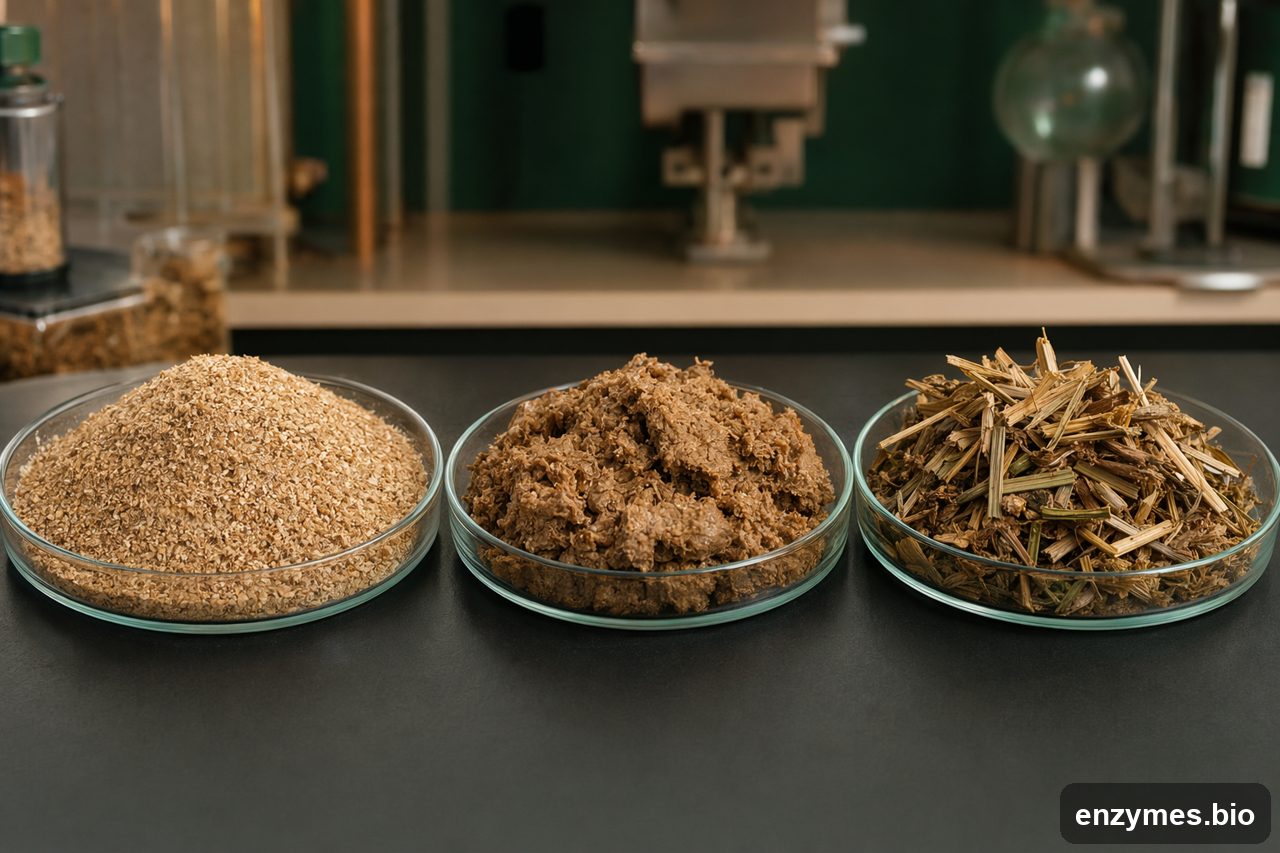
Xylanase works on a biological raw material, and biological raw materials do not behave like refined chemicals. Wheat bran, corn fiber, arabinoxylan-rich fractions, wood pulp, and agricultural residues can shift by season, supplier, storage, and pre-treatment.
Raw material variables that matter
Xylan content and arabinose substitution pattern
Fiber particle size and surface area
Moisture and storage age
Heat history from drying or pelleting
Lignin and mineral load
Solids concentration at dosing
Degree of prior mechanical damage
What to standardize
For repeatable troubleshooting, keep a small retained sample of the raw material from successful and failed runs. Compare the process around the enzyme, not only the enzyme itself.
Recommended records:
Substrate source and lot
Milling or refining settings
Slurry solids at enzyme addition
pH and temperature at addition
Hold time before the next major step
Mixing speed or recirculation condition
Downstream measurements such as viscosity, flow rate, filtration time, press load, extract yield, or screen blinding
Problem 3: hydrolysis is too strong
More xylanase is not always better. Excessive hydrolysis can change mouthfeel, pellet behavior, drainage profile, filtration quality, or fiber strength depending on the application.
Typical signs
Product becomes thinner than intended.
Solids settle differently.
Filtrate clarity worsens because more fine material is released.
Dough, mash, pulp, or slurry loses the target handling character.
Downstream equipment runs faster at first, then becomes unstable.
Corrective actions
Reduce dose in a controlled step-down trial.
Move addition later in the process.
Shorten the warm hold before downstream processing.
Add a defined heat or pH transition once the target effect is reached.
Separate early viscosity reduction goals from later texture or drainage goals.
Problem 4: the enzyme is added into the wrong chemical zone
Xylanase is selective for xylan linkages, but it is still a protein. Strong oxidizers, incompatible sanitation carryover, extreme pH zones, and aggressive process chemicals can reduce useful performance.
Watch for these conditions
Residual peroxide, chlorine-based chemistry, or strong oxidizing cleaners
Unneutralized acid or caustic carryover
Direct contact with concentrated salts or process aids before dilution
Metal-rich streams or recycled process water with variable chemistry
Preservatives or biocides in incoming ingredients
Corrective actions
Dose after aggressive chemistry has been diluted or neutralized.
Rinse and verify cleaning carryover before production.
Use a side stream for enzyme addition only if it is chemically compatible.
Review recycled water quality during good and bad runs.
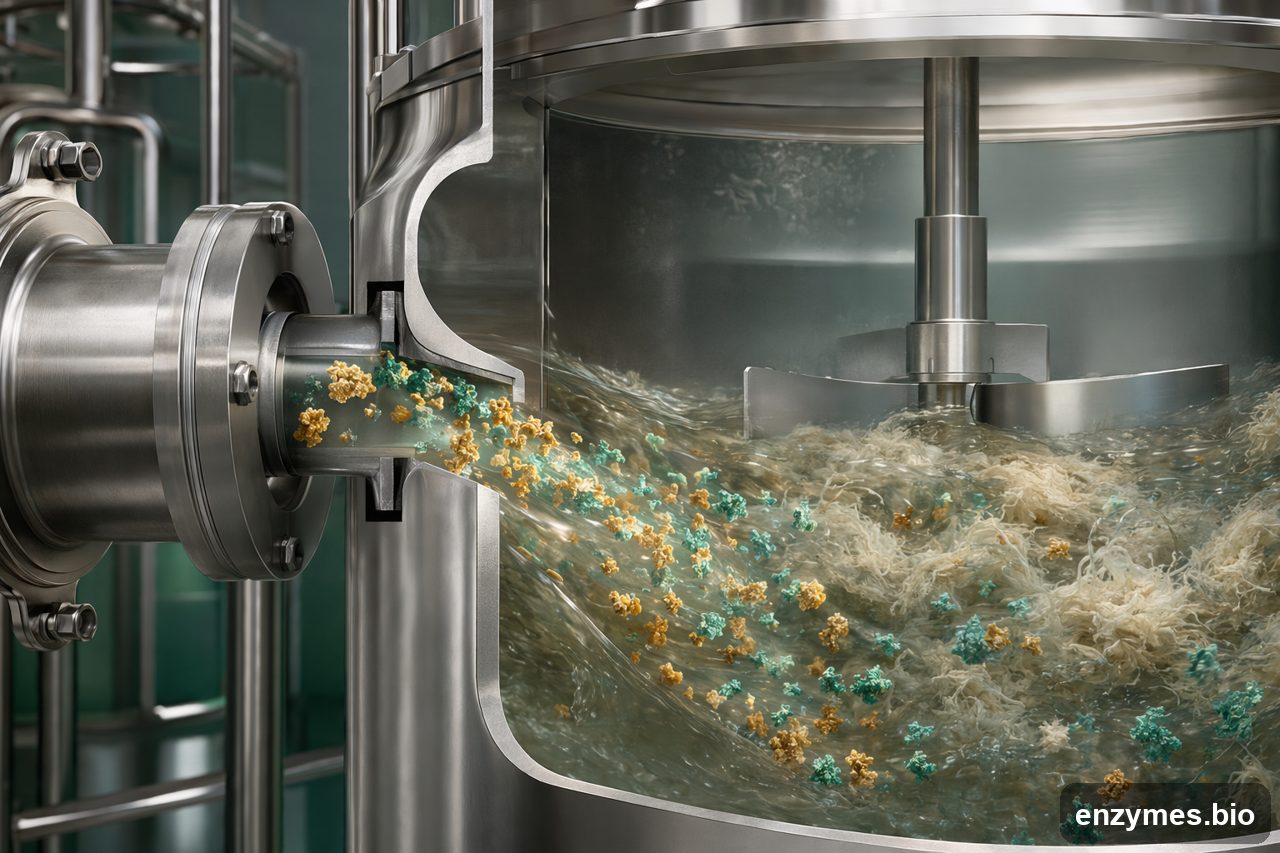
Problem 5: high-solids mixing hides the enzyme from the fiber
High-solids systems are efficient, but they punish poor wetting. In dense mash, pulp, or fiber slurry, the enzyme can disperse unevenly and create local over-treatment and under-treatment in the same batch.
Troubleshooting moves
Pre-dilute the enzyme into compatible process water before addition.
Add into a zone with proven turbulent mixing or recirculation.
Avoid pouring onto a dry or partially wetted solids bed.
Confirm that recirculation reaches the full vessel, not only a short loop.
Sample from multiple points during a trial to detect uneven action.
Problem 6: filtration, pressing, or drainage does not improve
Xylanase can reduce hemicellulose-driven resistance, but not every filtration problem is a xylan problem. If the bottleneck is starch swelling, pectin, β-glucan, lignin, mineral scale, fine suspended solids, or poor flocculation, xylanase alone may not unlock the line.
Separate the bottleneck
Ask three questions:
Did viscosity change, but filtration did not?
Did filtrate clarity get worse as fine material released?
Did the pressure profile improve only during part of the run?
If the answer is yes, the xylanase may be working while another process constraint is still limiting throughput.
Corrective actions
Compare pre-filter viscosity with filter performance.
Check particle size distribution before and after enzyme contact.
Review screen, press, or filter media condition.
Consider whether another substrate class is driving resistance.
Rebalance flocculation, settling, or clarification after hydrolysis.
Problem 7: storage and handling reduce performance before use
Industrial enzymes are built for production environments, but they should not be treated as inert minerals. Heat, repeated freeze-thaw stress, contamination, open containers, and long exposure to plant dust or washdown water can erode consistency.
Handling checklist
Store closed and protected from heat and direct sunlight.
Avoid leaving containers open in dusty or wet areas.
Use clean transfer equipment.
Prevent backflow from process lines into the enzyme container.
Rotate inventory and document open-container dates.
Do not mix with incompatible process aids in a day tank unless the blend has been validated.
A practical troubleshooting protocol
Use a structured trial instead of changing five variables at once.
Step 1: define the production target
Choose one primary outcome:
Lower slurry viscosity
Faster flow or pumping
Better extract release
Improved drainage or pressing
Reduced screen blinding
More stable texture
More consistent downstream yield
Step 2: capture the current process window
Record the actual condition at the enzyme contact point:
Substrate type and solids
Temperature
pH
Addition point
Mixing condition
Residence time
Next heating, chemical, or separation step
Relevant downstream performance data
Step 3: run a controlled dose ladder
Test a low, current, and high dose around the existing process. Keep substrate, solids, hold time, and mixing constant. If the response is flat, the issue is likely access, compatibility, residence time, or the wrong bottleneck. If the response is steep, the process is sensitive and may need tighter control.
Step 4: change one process variable
Good variables to test one at a time:
Addition earlier or later
Longer or shorter contact time
Improved pre-wetting
Different mixing point
Adjusted pH before dosing
Lower exposure to heat or oxidizing chemistry
Step 5: judge by manufacturing outcomes
Do not rely on a single lab number. For B2B production, the useful question is whether the line runs better.
Track outcomes such as:
Pump load
Flow rate
Viscosity trend
Extraction yield
Filtration time
Press cake behavior
Clarifier load
Screen cleaning frequency
Final product texture or handling quality
What to send when asking for technical support
A good support request saves days. Include the information below when contacting Hemivane for xylanase selection or process troubleshooting.
Application and substrate type
Current process flow diagram or step list
Solids level at dosing
pH and temperature at dosing
Addition point and contact time
Chemical additions before and after the enzyme
Heating, drying, pelleting, pulping, or separation steps
Desired production outcome
What has already been tested
Any differences between successful and failed runs
When to consider a different xylanase profile
If the process window cannot move, the enzyme may need to fit the line rather than the line fitting the enzyme. Consider a different xylanase profile when:
The process runs warmer or cooler than the current product prefers.
The pH cannot be adjusted.
Contact time is short.
The substrate is unusually substituted, lignified, or pre-treated.
The desired effect is drainage rather than viscosity reduction.
The line needs a more controlled endpoint.
Request a quote or troubleshooting review
Tell us what your xylanase is expected to do, where it is added, and what is failing. Hemivane can help narrow the likely cause and recommend a supply fit for your process window.