Hemivane — learn

Liquid vs Powder Xylanase: Format Selection Guide

Compare liquid and powder xylanase formats for manufacturing, formulation, storage, dosing, and procurement decisions across feed, baking, brewing, pulp, and biomass processes.

Xylanase in Liquid vs Powder Form

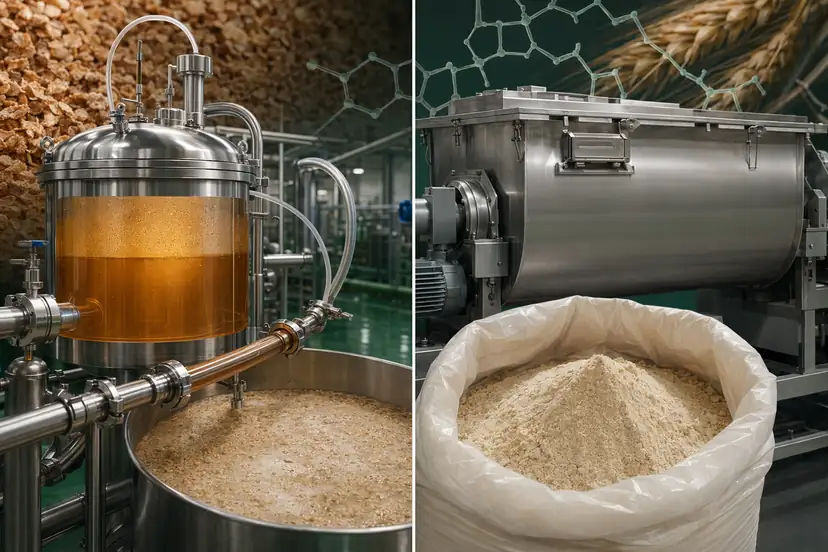
Xylanase (endo-1,4-β-xylanase) is purchased in different physical formats for a reason. Liquid and powder xylanase can both deliver strong process value, but they behave differently in receiving, storage, blending, dosing, and final formulation.

For procurement and R&D teams, the right choice is rarely just “which one is stronger?” The better question is: which format fits the way your plant handles raw materials, controls addition points, manages shelf life, and protects enzyme performance before use?
Xylanase — liquid vs powder xylanase

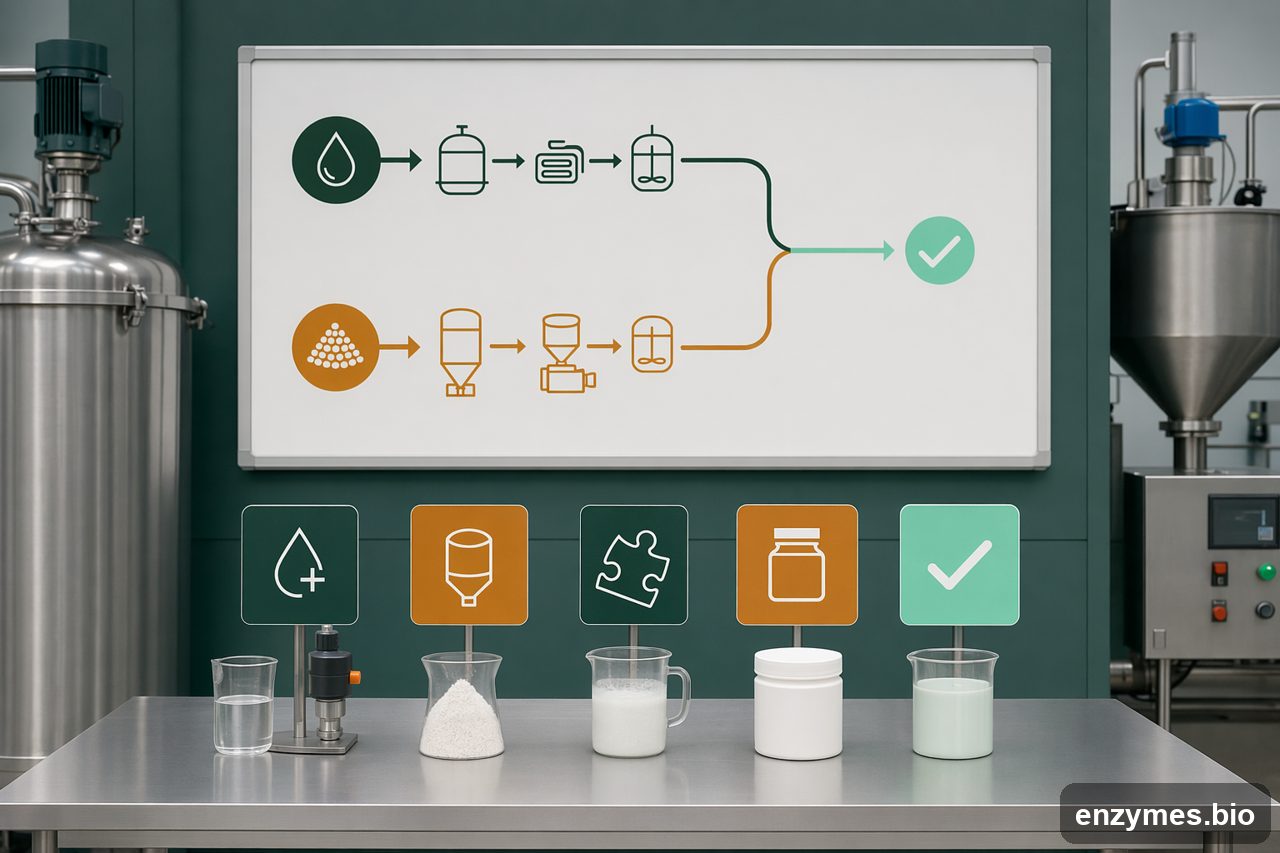
This guide compares liquid and powder xylanase in practical manufacturing terms.


What changes when xylanase is supplied as liquid or powder?

The enzyme function is the same: xylanase selectively hydrolyzes xylan-rich hemicellulose in plant cell walls, helping open fibrous structures, reduce viscosity, improve extractability, and support more consistent processing.

The format changes the commercial and operational profile:

  • Liquid xylanase is typically easier to meter into wet process streams and automated dosing systems.
  • Powder xylanase is typically easier to incorporate into dry blends, premixes, and products that must remain shelf-stable in low-moisture packaging.
  • Both formats require attention to temperature, moisture, pH exposure, compatibility with other ingredients, and handling conditions.

Liquid xylanase: where it fits best

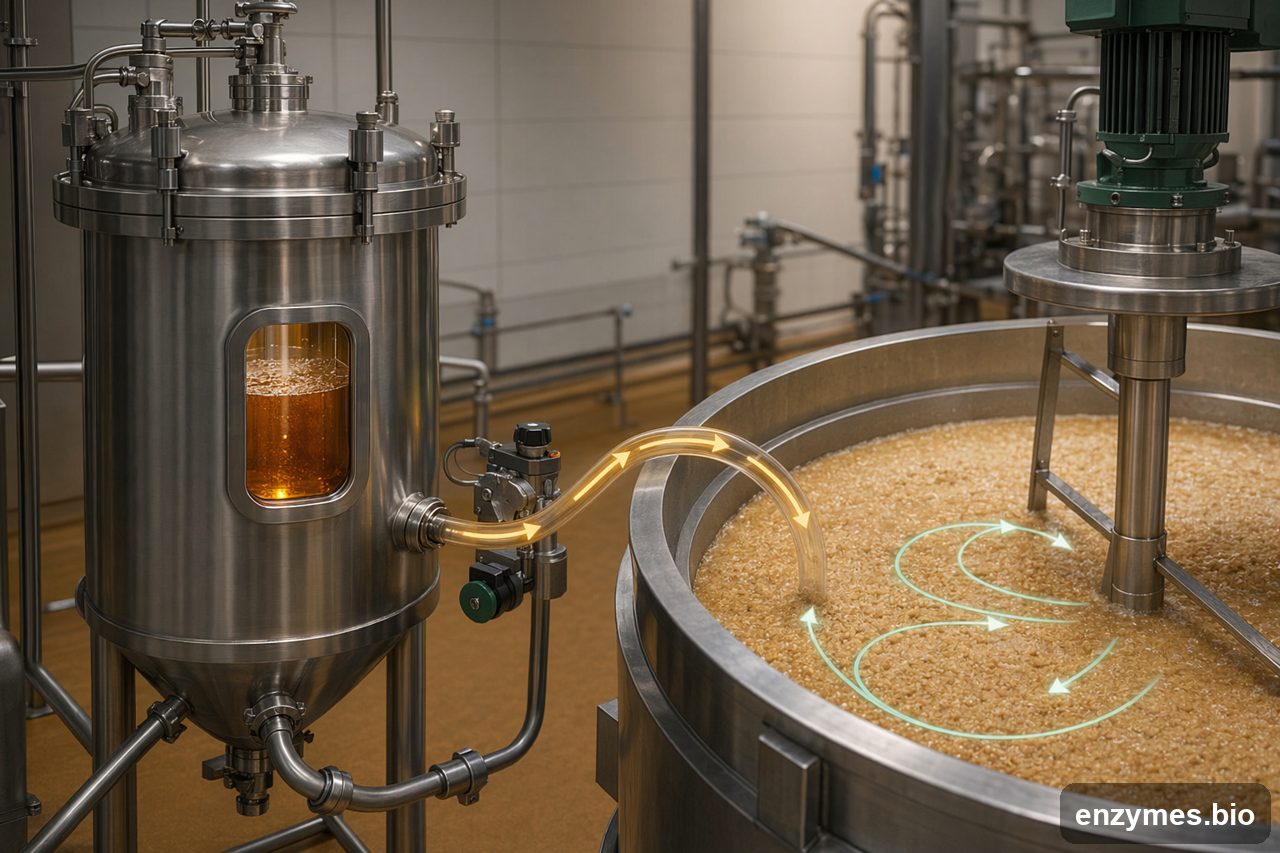
Liquid xylanase is often selected when the enzyme is added directly into a hydrated process or when the production line already uses pumps, tanks, and controlled liquid dosing.

Common advantages

  • Fast dispersion in water-based systems: Useful where rapid contact with substrate is important.
  • Clean metering into continuous processes: Compatible with automated dosing skids and process control logic.
  • Reduced airborne dust risk: Helpful in facilities where powder handling controls are limited.
  • Simple trial execution: R&D and pilot teams can often adjust liquid addition points quickly during process mapping.

Practical watchpoints

Liquid xylanase needs protection from conditions that can reduce enzyme performance over time.

Key considerations include:

  • Storage temperature control: Liquid formats may require tighter warehouse discipline depending on formulation.
  • Preservative and formulation compatibility: The enzyme system should be checked against downstream ingredients and regulatory requirements.
  • Freeze-thaw exposure: Cold-chain events or unheated receiving areas can affect product consistency.
  • Pump and tubing compatibility: Viscosity, shear, and cleaning procedures should be reviewed before scale-up.

Typical use cases

Liquid xylanase is often the practical choice for:
Xylanase — liquid vs powder xylanase
  • Wet milling or extraction processes
  • Brewing and distilling operations
  • Pulp and fiber treatment systems
  • Biomass hydrolysis trials
  • Plants with existing liquid enzyme infrastructure

Powder xylanase: where it fits best

Powder xylanase is often preferred when the enzyme must be blended into dry carriers, premixes, concentrates, or solid formulations.

Common advantages

  • Good fit for dry blending: Easier to incorporate into flour improvers, feed premixes, dry process aids, or powder concentrates.
  • Strong logistics profile: Often simpler to transport and warehouse when moisture is controlled.
  • Formulation flexibility: Can be built into multi-enzyme blends or carrier-based systems.
  • Lower risk of liquid leakage or container damage: Useful for long-distance shipments or distributor handling.

Practical watchpoints

Powder xylanase depends heavily on carrier choice, dust control, and mixing quality.

Key considerations include:

  • Dust management: Facilities should use appropriate handling practices for enzyme powders.
  • Blend uniformity: Low-inclusion formulations require validated mixing and segregation control.
  • Moisture protection: Humidity can reduce free-flowing behavior and may affect stability.
  • Compatibility with aggressive ingredients: Oxidizers, high-mineral matrices, acids, and alkaline components should be evaluated before blending.

Typical use cases

Powder xylanase is often the practical choice for:

  • Bakery improver systems
  • Animal feed premixes
  • Dry enzyme blends
  • Distributor repacking programs
  • Products shipped through ambient dry-goods logistics

Liquid vs powder xylanase: decision table

Decision factor Liquid xylanase Powder xylanase
Best addition point Wet process streams, tanks, slurries Dry blends, premixes, concentrates
Handling style Pumped, poured, or metered Scooped, conveyed, weighed, or blended
Dust profile Lower dust risk Requires dust-control practices
Moisture sensitivity Formulation-dependent Requires dry storage and sealed packaging
Dispersion Rapid in aqueous systems Depends on carrier and mixing method
Dosing control Strong in automated liquid systems Strong in validated dry blending systems
Logistics Check temperature and leakage risk Check humidity and package integrity
Best for Wet operations and process dosing Dry formulations and shelf-stable blends

Procurement questions to ask before choosing a format

Before requesting pricing, define the operating environment. This helps avoid overbuying, underperforming trials, or choosing a format that creates avoidable plant friction.

Ask these questions internally:

  1. Where will xylanase be added? Into water, mash, pulp slurry, dough system, feed premix, or dry carrier?
  2. How will it be dosed? Manual addition, loss-in-weight feeder, liquid pump, batch tank, or continuous metering?
  3. What are the storage conditions? Ambient warehouse, temperature-controlled room, humid environment, or seasonal temperature swings?
  4. What ingredients will contact the enzyme before use? Minerals, salts, acids, alkalis, oxidizing agents, preservatives, surfactants, or other enzymes?
  5. How long will the formulated product sit before use? Immediate plant use, short distributor hold, or long shelf-life requirement?
  6. What packaging format does receiving prefer? Pails, drums, totes, bags, cartons, or smaller trial packs?
  7. Is dust control already in place? Particularly important for powder enzyme handling.

Format selection by application

Baking and flour treatment

Powder xylanase is often favored for dry bakery improvers and flour treatment blends because it can be distributed through a carrier system before reaching the dough. Liquid xylanase can still be useful in centralized liquid dosing systems, especially where bakeries already manage liquid improvers.

Xylanase — liquid vs powder xylanase

Animal feed

Powder xylanase commonly fits premix and compound feed workflows. The main concerns are blend uniformity, compatibility with minerals and other actives, and process exposure. Liquid xylanase may be selected when applying enzyme after aggressive processing steps or when a facility uses liquid application equipment.

Brewing, distilling, and grain processing

Liquid xylanase often fits these hydrated systems well. Fast dispersion into mash, steep water, or process liquor can simplify trials and production dosing. Powder can also be used where pre-dissolution is acceptable and dry storage is preferred.

Pulp, paper, and fiber processing

Liquid xylanase is commonly practical for pulp slurries and controlled process addition. The decision should account for pH, temperature exposure, residence time, and compatibility with process chemicals.

Biomass and plant fiber conversion

Either format can work. Liquid xylanase can simplify lab and pilot dosing into slurries, while powder xylanase may be preferred when building dry enzyme packages for field trials, distributor supply, or multi-enzyme formulations.


Stability is not only about format

A liquid product is not automatically less stable, and a powder product is not automatically more stable. Stability depends on the full formulation and the way it is handled.

Important variables include:

  • Enzyme strain and protein engineering background
  • Stabilizer system
  • Carrier or diluent selection
  • Moisture exposure
  • Temperature history
  • Packaging barrier properties
  • Compatibility with the final formulation
  • Time between blending and use

For commercial evaluation, request stability guidance specific to your storage conditions and application matrix.


Trial planning: compare formats fairly

When comparing liquid and powder xylanase, keep the process target constant. A fair trial should evaluate the format against measurable manufacturing outcomes, such as:

  • Viscosity reduction
  • Dough handling behavior
  • Fiber drainage or dewatering
  • Extract yield
  • Filtration rate
  • Mash or slurry flow
  • Product consistency
  • Handling losses
  • Ease of dosing
  • Operator acceptance

Avoid judging format only by purchase price. Total cost includes waste, handling time, dosing accuracy, cleaning burden, stability, freight, packaging disposal, and production reliability.


When to choose liquid xylanase

Choose liquid xylanase when:

  • Your process is already wet at the enzyme addition point.
  • You need controlled pump dosing.
  • Dust minimization is a high priority.
  • Operators need fast dispersion without dry premixing.
  • The plant can manage the required storage conditions.

When to choose powder xylanase

Choose powder xylanase when:

  • The enzyme must be part of a dry blend or premix.
  • Your logistics favor dry ambient goods.
  • You need carrier-based dilution for accurate distribution.
  • The finished product must remain low-moisture.
  • Your facility has appropriate powder handling controls.

Request a quote or format recommendation

If you are comparing liquid and powder xylanase for a real production line, share the application, addition point, storage conditions, target outcome, and preferred packaging. Hemivane can help define a practical format path for sampling, pilot work, or commercial supply.

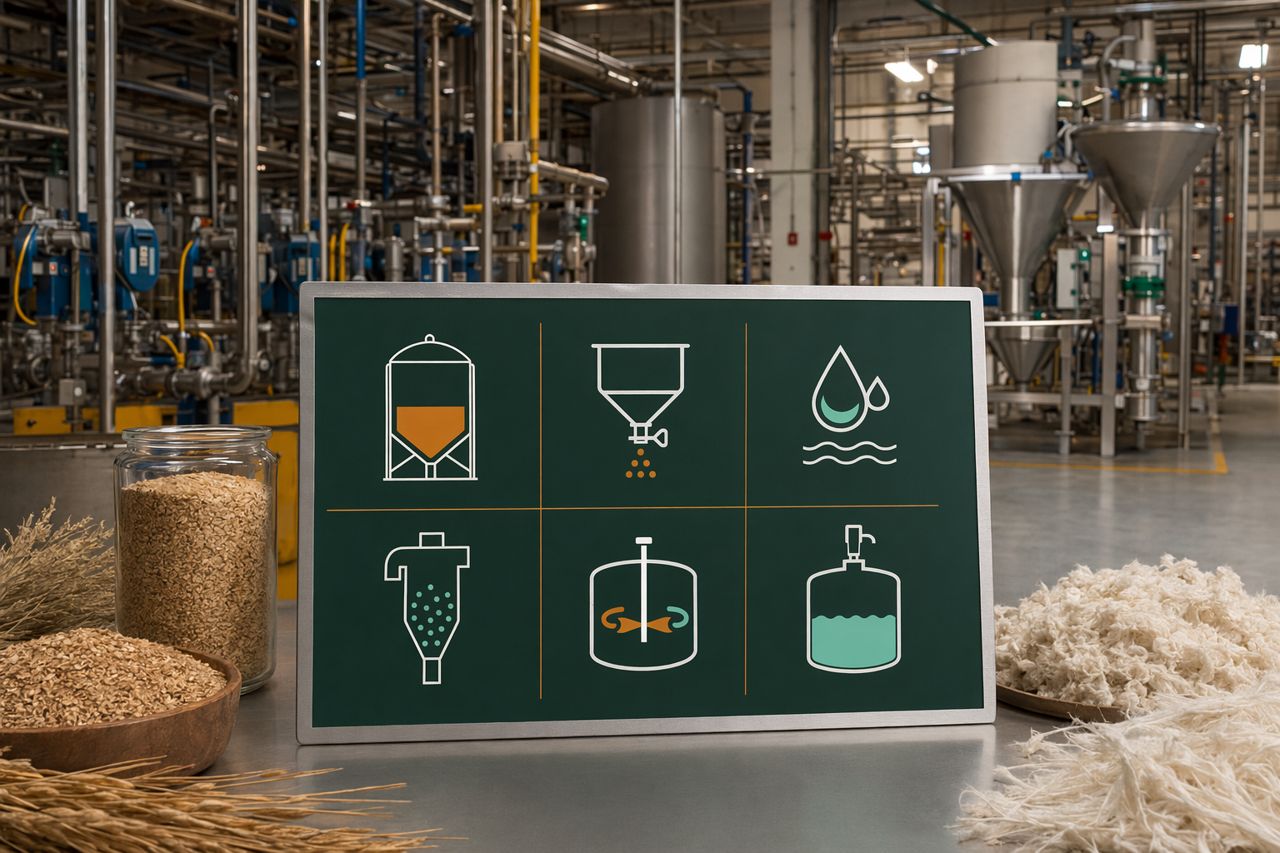


Liquid vs Powder Xylanase: Format Selection GuideLiquid vs Powder Xylanase: Format Selection GuideLiquid vs Powder Xylanase: Format Selection Guide
More from Hemivane

Index

Get in touch

Request pricing & specs

Tell us your application and volume — we reply with pricing and lead time.

We reply by email.Only name, email and message are needed.