Hemivane — learn
How Xylanase Breaks Down Xylan and Arabinoxylans
A technical field guide to how Xylanase (endo-1,4-β-xylanase) opens plant cell-wall xylan, reduces viscosity, and changes fiber behavior in industrial processes.
Xylanase is used when plant fiber is not just a solid contaminant, but an active process variable: it binds water, raises viscosity, traps starch or protein, slows filtration, and changes how a slurry pumps, bakes, ferments, drains, or separates.
Hemivane focuses on Xylanase (endo-1,4-β-xylanase): an enzyme class that cuts internal bonds in the xylan backbone of hemicellulose. The practical result is not simply “fiber breakdown.” It is a controlled opening of a branched polysaccharide network that can improve flow, release entrapped material, and shift insoluble fiber toward more manageable soluble fragments.
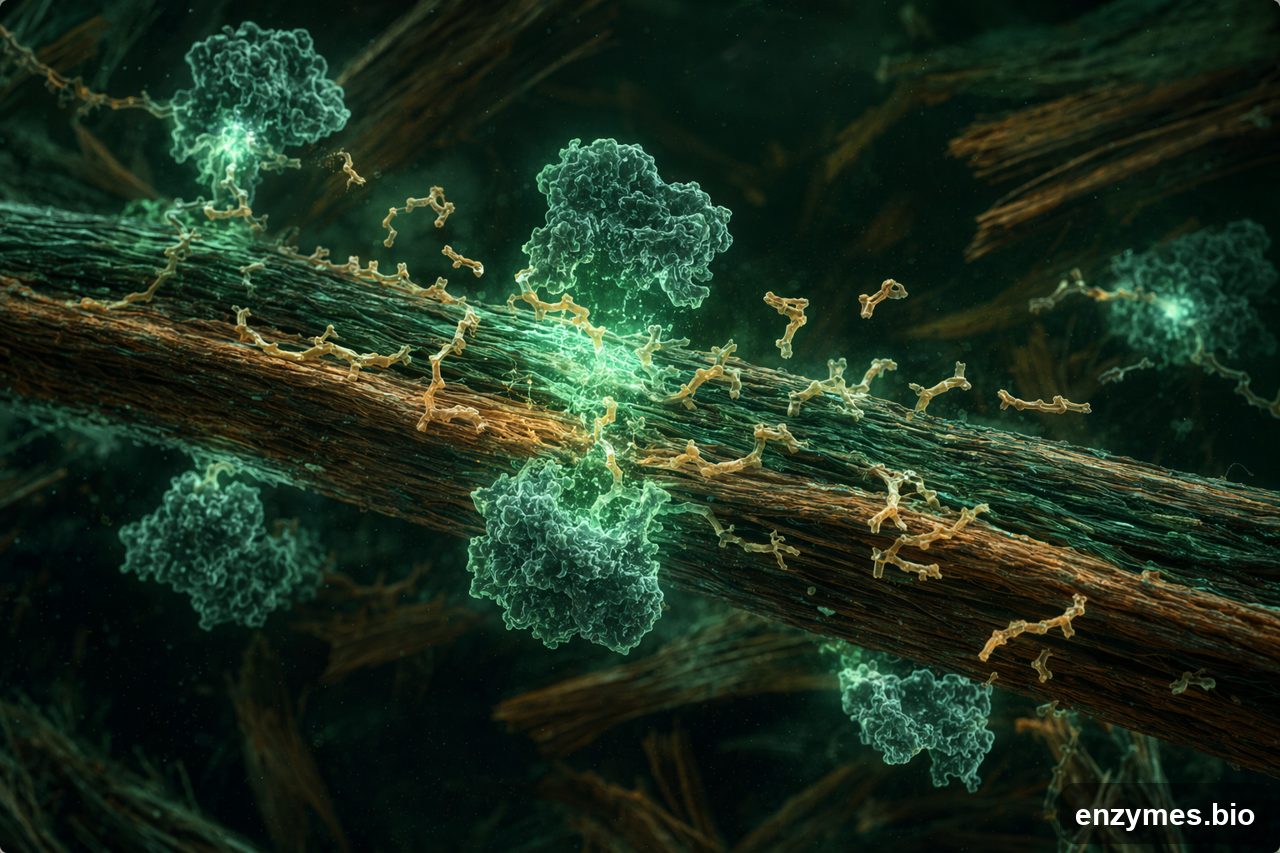
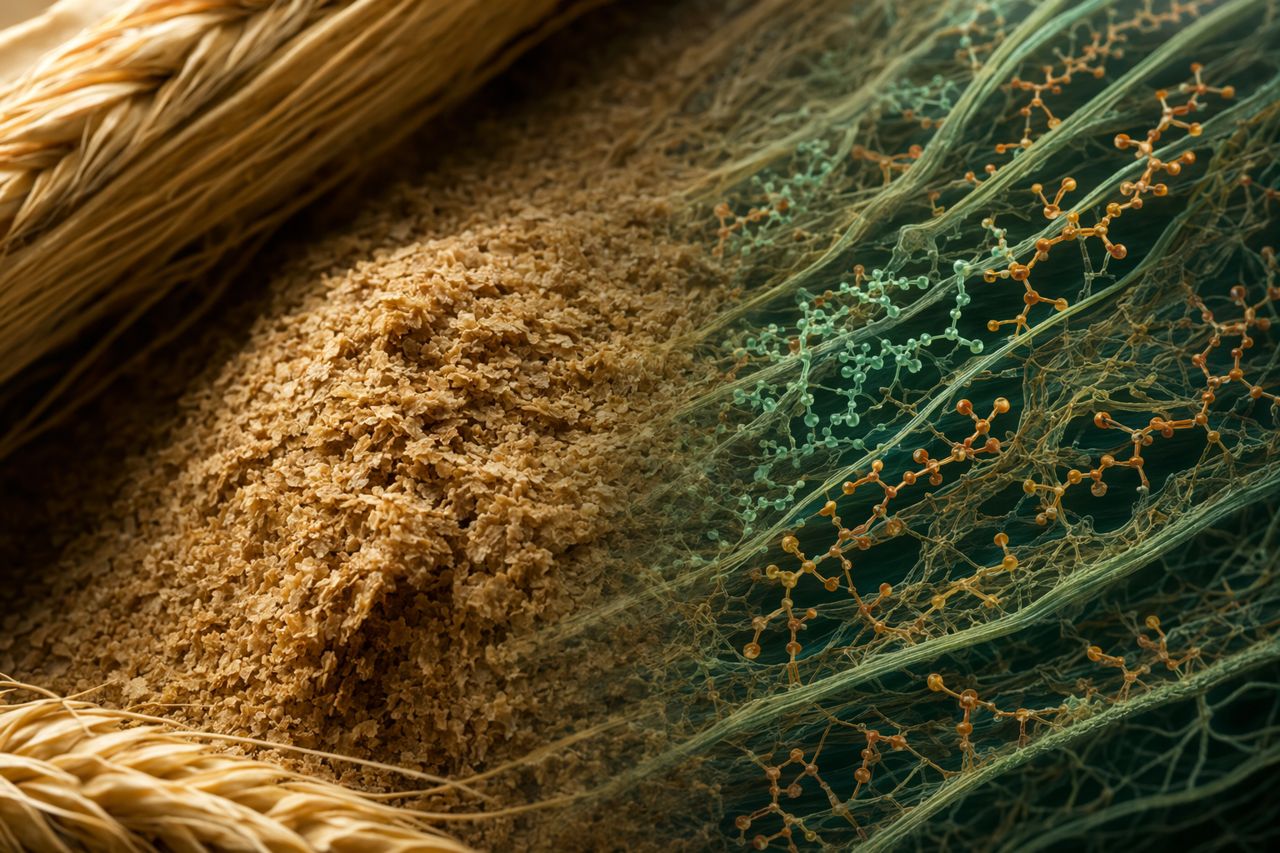
In cereal bran, corn fiber, wood pulp, oilseed meals, and many agricultural co-products, xylan sits in the plant cell wall alongside cellulose, lignin, pectin, proteins, and minerals.
The main chain is built from xylose units linked through β-1,4 bonds. In real raw materials, that chain is rarely clean or uniform. It may carry side groups such as:
This is why two materials with similar “fiber” declarations can behave very differently in production. Xylanase performance depends on the physical and chemical accessibility of the xylan, not only on the total hemicellulose present.
Xylanase cleaves internal β-1,4 linkages in the xylan backbone. Because it acts internally, it can rapidly shorten long-chain xylan and arabinoxylan molecules into smaller soluble fragments and xylo-oligosaccharides.
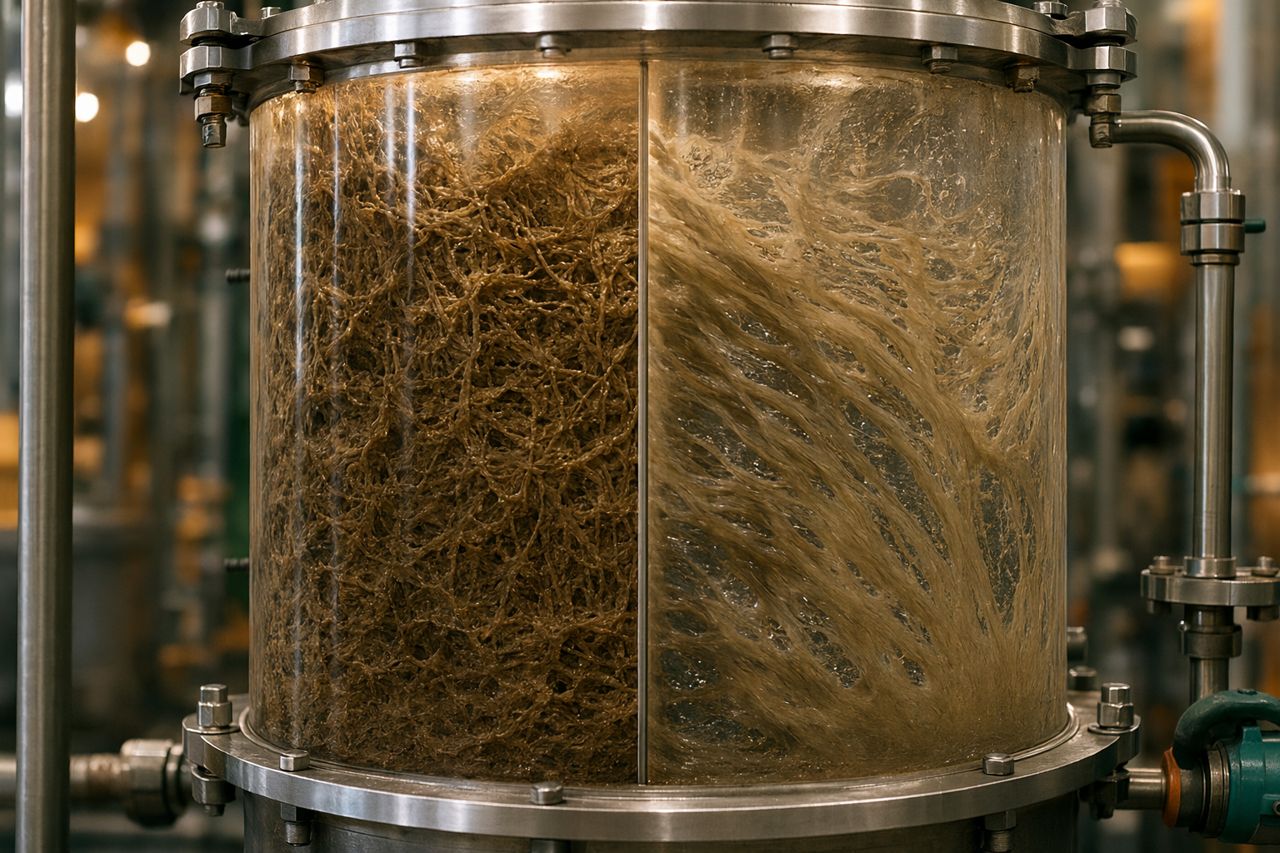
That internal cutting pattern matters. Long-chain arabinoxylans can behave like hydrocolloids: they hold water, build viscosity, and interfere with mass transfer. When Xylanase opens the backbone, the same material becomes shorter, less entangling, and easier to move through a process.
Enzyme adsorption and access
Xylanase must reach exposed or swollen xylan regions. Milling, hydration, cooking, pretreatment, or alkaline exposure can change access dramatically.
Selective internal cleavage
The enzyme cuts within the xylan chain instead of stripping only from the ends. This reduces polymer length and weakens the fiber network.
Viscosity reduction
Shorter chains entangle less. In many cereal and biomass slurries, this can improve pumping, mixing, heat transfer, and filtration behavior.
Release of entrapped components
Opening hemicellulose can expose starch, protein, oil, fermentable carbohydrates, or minerals that were physically shielded by the cell-wall matrix.
Formation of soluble oligosaccharides
The product profile depends on substrate structure, processing conditions, and companion enzyme systems. Xylanase often generates a distribution of smaller xylan-derived fragments rather than a single product.
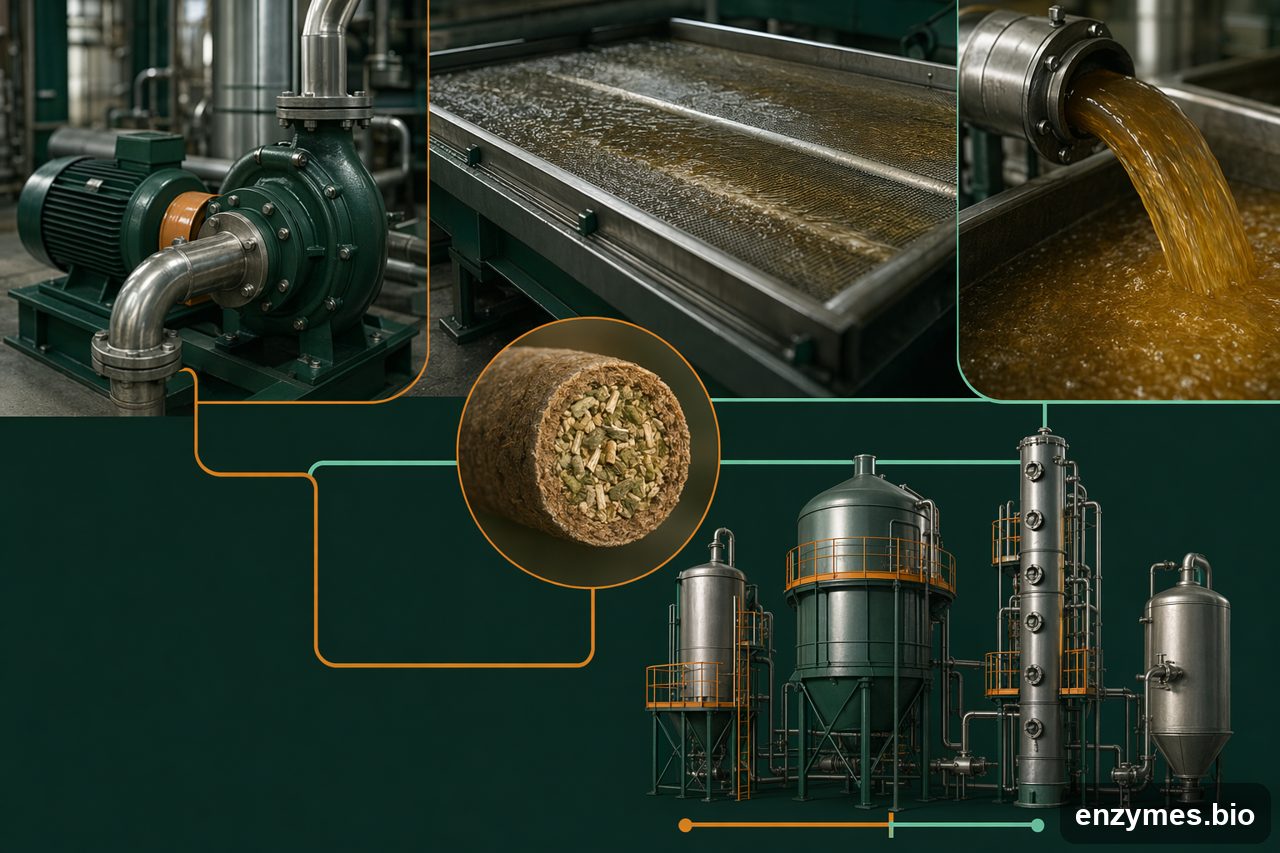
A practical xylanase program starts with the raw material.
Wheat, rye, barley, and corn contain arabinoxylans with varying solubility and branching. Soluble arabinoxylans are often major viscosity contributors. Insoluble arabinoxylans can restrict nutrient release or reduce extract recovery until the cell-wall structure is opened.
For cereal processing, the useful question is: are you trying to lower viscosity, improve extract yield, increase dough handling tolerance, enhance feed digestibility, or release locked starch and protein? The same enzyme class may be used differently depending on the objective.
In hardwood and non-wood pulp streams, xylan is integrated into a lignocellulosic network. Enzyme access is strongly shaped by fiber morphology, prior cooking, washing, pH, and residual process chemistry.
Here, Xylanase is often evaluated for fiber modification, drainage behavior, bleachability support, and process-water impacts. The goal is usually controlled surface and matrix modification, not complete hydrolysis.
Corn stover, wheat straw, bagasse, husks, and similar materials contain xylan in a highly structured lignocellulosic matrix. Xylanase can improve hemicellulose conversion and help expose cellulose for downstream processing, especially when paired with appropriate pretreatment and companion enzymes.
If the xylan is locked behind lignin, crystalline cellulose, waxes, or compact particle structure, the enzyme may not reach enough target sites. Mechanical size reduction, hydration time, thermal treatment, or chemical pretreatment can change the outcome more than dose alone.
Dense arabinose branching can reduce access to the backbone. Some raw materials benefit from enzyme systems that include side-chain activity, while others respond well to xylanase alone. Bench screening should be built around the actual material and target process metric.
A strong laboratory result may not transfer if the enzyme is exposed to the wrong pH window, short contact time, thermal hold, shear environment, or incompatible chemistry. The right grade is the one that remains effective inside the real unit operation.
High-solids systems limit diffusion. Xylanase can still work, but mixing, hydration, particle size, and contact uniformity become critical. In low-water systems, the enzyme program should be tested under production-like rheology rather than in dilute laboratory conditions only.
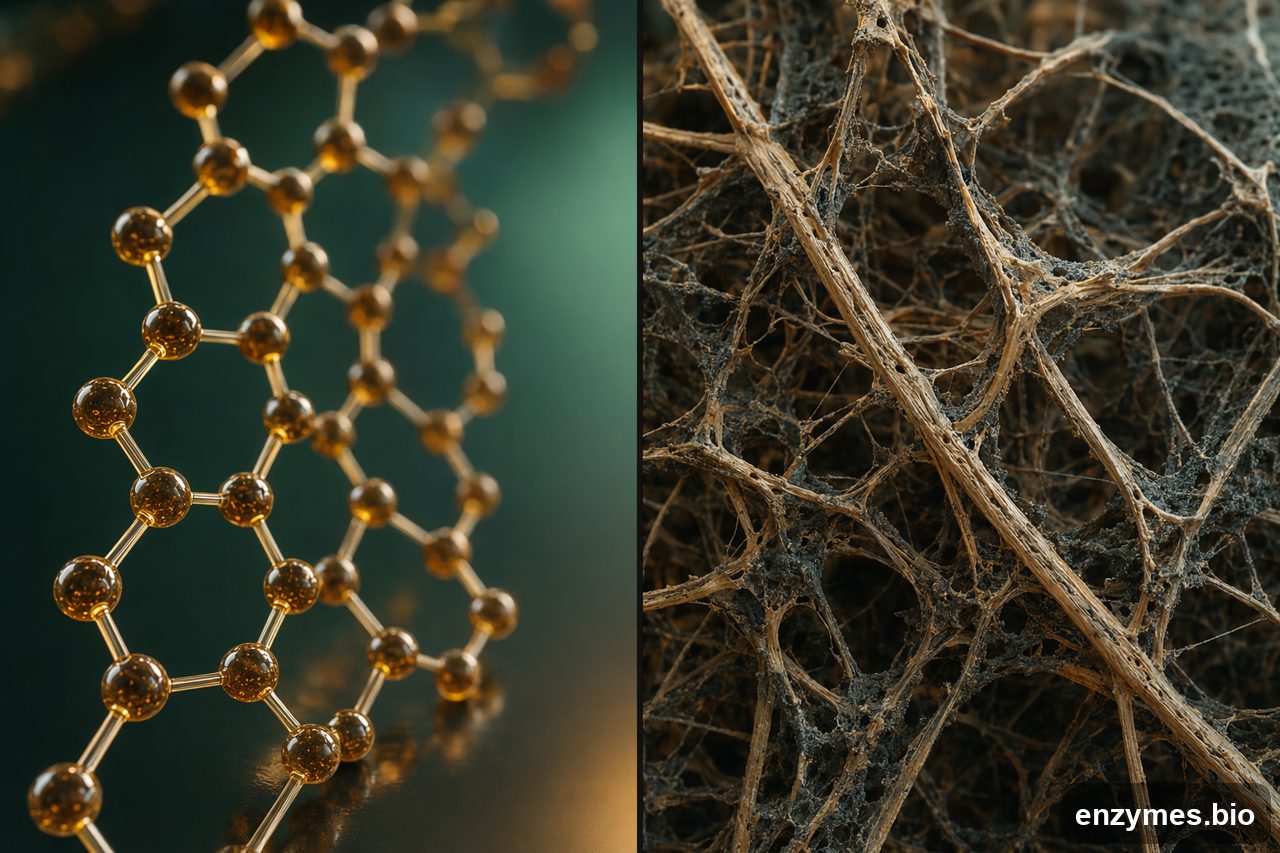
Xylanase is often used with cellulase, β-glucanase, amylase, protease, pectinase, or accessory hemicellulases. The combination should be selected to solve the process problem, not simply to maximize hydrolysis.
The best success metric depends on the application. Common industrial indicators include:
For procurement and R&D teams, the central question is not “does xylanase hydrolyze xylan?” It is “does this xylanase change our material in the direction our process needs, under our actual constraints?”
Xylanase can be used to manage arabinoxylan behavior in flour, bran, malt, brewing adjuncts, cereal extracts, and grain-based slurries. Depending on the process, the target may be viscosity control, improved handling, extract yield, or texture optimization.
In feed, arabinoxylans can increase digesta viscosity and reduce nutrient availability, especially in wheat, rye, barley, and corn-based formulations. Xylanase helps open the non-starch polysaccharide fraction and can support more consistent feed conversion when matched to the diet and processing conditions.
Xylanase can modify hemicellulose at the fiber surface and within accessible wall regions. Properly selected, it can support drainage, refining behavior, or downstream chemical efficiency while preserving fiber integrity.
In lignocellulosic conversion, Xylanase helps reduce hemicellulose barriers around cellulose and can increase the release of xylan-derived sugars or oligosaccharides. It is most effective when aligned with pretreatment severity, solids loading, and downstream conversion goals.
A useful xylanase screen should be built around the buyer’s operating reality.
Define the required outcome first:
Model substrates are useful for science, but procurement decisions should be based on the actual flour, bran, pulp, mash, slurry, feed blend, or biomass stream. Substitution pattern, particle size, thermal history, and residual chemistry all affect performance.
Track the metric that matters to production: pump load, filter time, extract recovery, dough handling, drainage, yield, conversion, or product quality. A biochemical response is only valuable if it translates into a process advantage.
Before scale-up, verify compatibility with pH, temperature exposure, metal ions, cleaning residues, oxidants, preservatives, and companion enzymes in the process.
Xylanase is one type of hemicellulase. Hemicellulase is a broader term covering enzymes that act on hemicellulose structures such as xylan, mannan, arabinan, and related side chains.
Xylanase targets xylan backbones, not cellulose. In mixed plant cell walls, opening xylan can indirectly improve cellulose accessibility, but cellulose hydrolysis requires cellulase activity.
Long soluble arabinoxylan chains create viscosity through water binding and molecular entanglement. Endo-cleavage shortens those chains, reducing entanglement and improving flow behavior.
No. Once accessible target sites or contact time become limiting, additional enzyme may deliver little extra benefit. Process fit, substrate preparation, and residence time often matter as much as dosage.
Yes, but high solids make mixing, diffusion, hydration, and contact uniformity more important. Screening should reproduce the real solids level and rheology as closely as possible.
If you are evaluating Xylanase for a cereal, feed, pulp, biomass, or specialty fiber process, share the substrate, target outcome, process conditions, and purchasing format you need. Hemivane will respond through this site’s own contact workflow.

Tell us your application and volume — we reply with pricing and lead time.
We have received your message. We will reply by email.