How to Choose Xylanase for an Industrial Process | Hemivane
A practical xylanase selection guide for process engineers, R&D teams, and procurement buyers evaluating substrate fit, operating window, formulation, side activity profile, and pilot-trial criteria.
Xylanase selection is rarely a catalog exercise. The right Xylanase (endo-1,4-β-xylanase) depends on the plant material, the water balance, the thermal profile, the process hold time, and the commercial endpoint you need to improve.
Hemivane evaluates xylanase like a manufacturing input, not a commodity label claim. This field guide gives procurement teams, process engineers, and R&D groups a practical framework for choosing a candidate before moving into sampling, piloting, or quote discussion.
What xylanase does in plain process language
Xylanase opens the xylan-rich portion of plant cell-wall hemicellulose. In industrial systems, that can make fibrous material behave differently:
Slurries can become easier to pump or mix.
Bound water can release more readily.
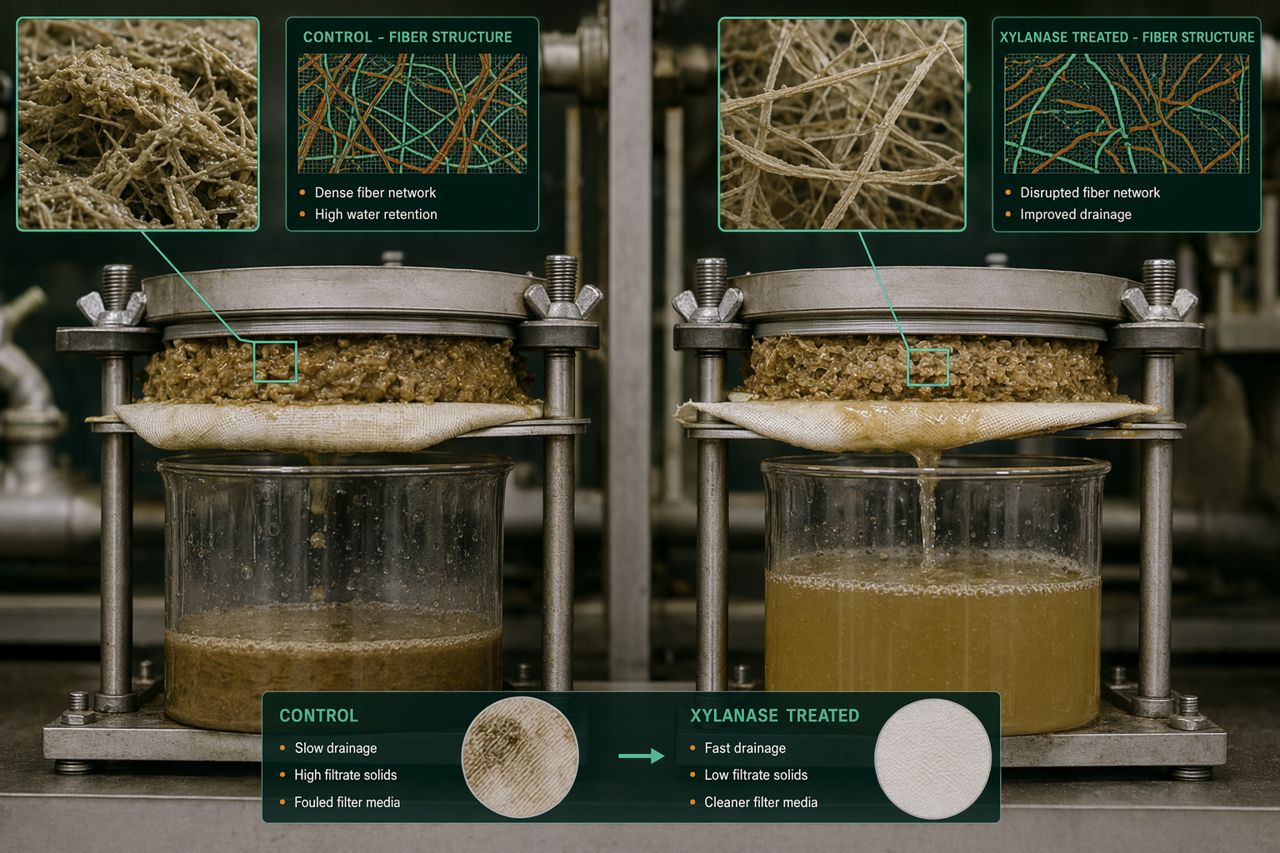
Solids can separate or drain more efficiently.
Extractable components can become more accessible.
Feed or biomass matrices can become more digestible.
Downstream filtration, pressing, clarification, or drying can become less constrained by viscosity and fiber entanglement.
The useful question is not “which xylanase is strongest?” The useful question is “which xylanase changes this specific substrate under this specific process window without creating unwanted side effects?”
Start with the substrate, not the enzyme
Different raw materials expose xylan in different ways. A xylanase that performs well in a wheat-based system may not behave the same in corn fiber, wood pulp, cereal bran, oilseed meal, or a mixed agricultural stream.
Substrate signals to define early
Process question
Why it matters for xylanase choice
Is the xylan highly branched or relatively accessible?
Branching can limit access and change which enzyme profile is useful.
Is the fiber already milled, cooked, extruded, steeped, or chemically conditioned?
Pretreatment changes exposure of hemicellulose and the enzyme contact surface.
Is the system high-solids, dilute, or staged?
Water availability and mixing affect contact between enzyme and substrate.
Are starch, cellulose, protein, or beta-glucan also present?
Co-components can affect viscosity, filtration, and side-activity tolerance.
Is the raw material consistent or variable by season and source?
Variable feedstocks need a more forgiving operating profile.
If the substrate is not well defined, the best first step is usually a small comparison screen using your real feedstock rather than a generic laboratory substrate.
Match the enzyme to the operating window
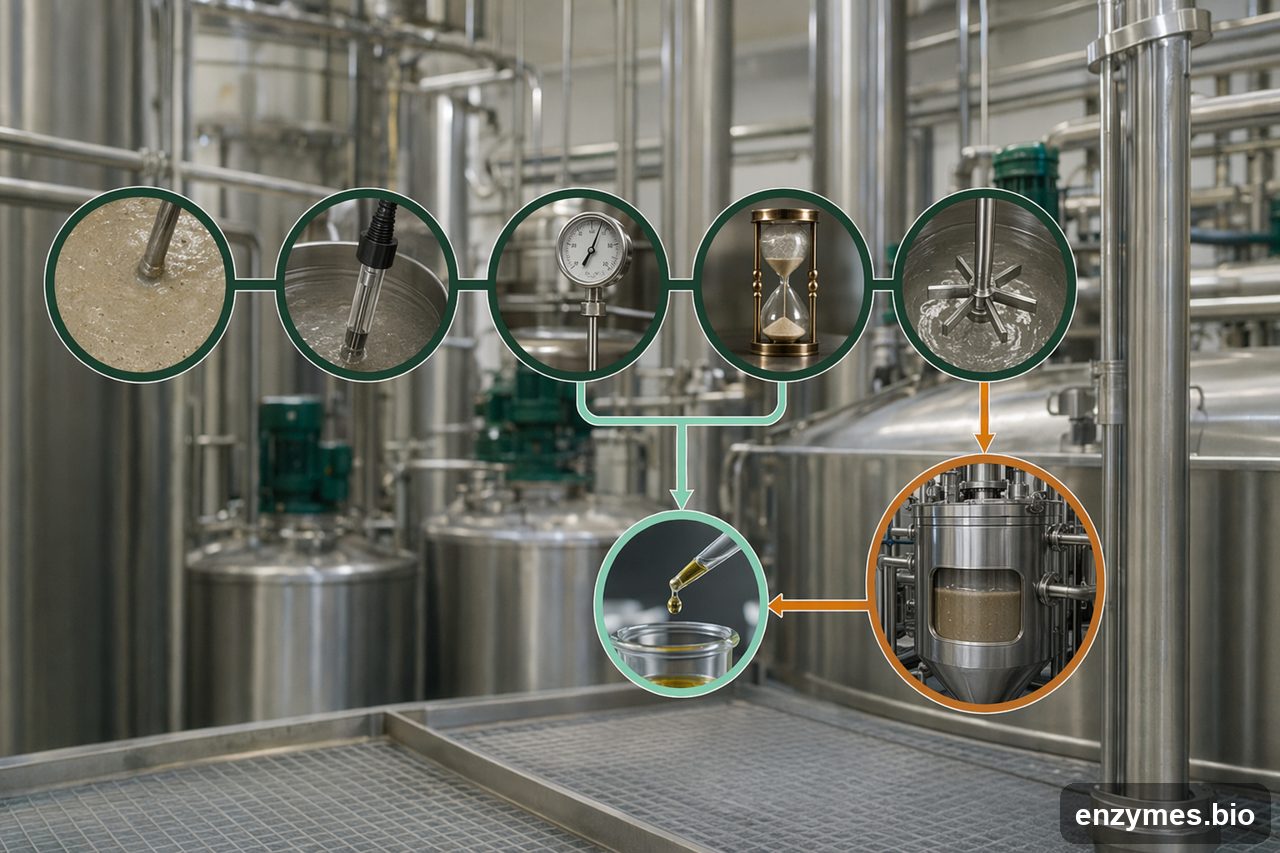
A xylanase can only help if it remains functional where the process actually runs. Before requesting samples or pricing, map the intended enzyme contact point.
Define the process window
pH at the enzyme addition point — not just final product pH.
Temperature during the hold period — including heat-up and cool-down exposure.
Residence time — minutes available for useful reaction before the next kill step or separation step.
Solids loading — high-solids systems often need stronger mixing logic and realistic pilot conditions.
Shear and agitation — determines whether the enzyme reaches the fiber network evenly.
Process chemistry — salts, preservatives, oxidants, surfactants, acids, alkalis, or residual cleaning agents can affect performance.
Order of addition — enzymes, acids, heat, mechanical treatment, and other processing aids can interact.
A technically good xylanase can still fail commercially if it works only outside the plant’s real window.
Define the business outcome before comparing products
Xylanase is used for different reasons across industries. Your selection criteria should be tied to the value driver, not only to a generic enzyme description.
Common industrial objectives
Objective
What to measure in your process
Lower viscosity
Mixing load, pumpability, flow behavior, transfer time, slurry handling.
Improved extraction
Yield, soluble solids, extract clarity, recovery of target fraction.
Faster drainage or filtration
Filtration time, press performance, cake moisture, throughput.
Nutrient availability, fiber breakdown indicators, consistency in mash or pellet conditions.
Pulp or biomass processing
Fiber modification, liquor behavior, refining response, downstream chemical demand.
A good supplier conversation starts with the endpoint: “We need faster filtration after thermal conditioning,” or “We need viscosity reduction without over-softening the fiber structure.” That is more useful than asking for the highest-spec product on paper.
Evaluate side activity profile carefully
Industrial xylanase preparations may include other enzymatic activities depending on production organism, downstream processing, and formulation strategy. Sometimes this is helpful. Sometimes it is a problem.
Side activities that may matter
Cellulase-like effects may alter fiber strength, texture, or pulp behavior.
Beta-glucanase-like effects may support viscosity reduction in cereal streams but complicate attribution.
Protease-like effects may be undesirable where protein integrity, foam behavior, or product specification matters.
Amylase-like effects may interfere where starch behavior must remain controlled.
For many buyers, the best xylanase is not the broadest preparation. It is the cleanest fit for the process objective.
Choose the right physical form
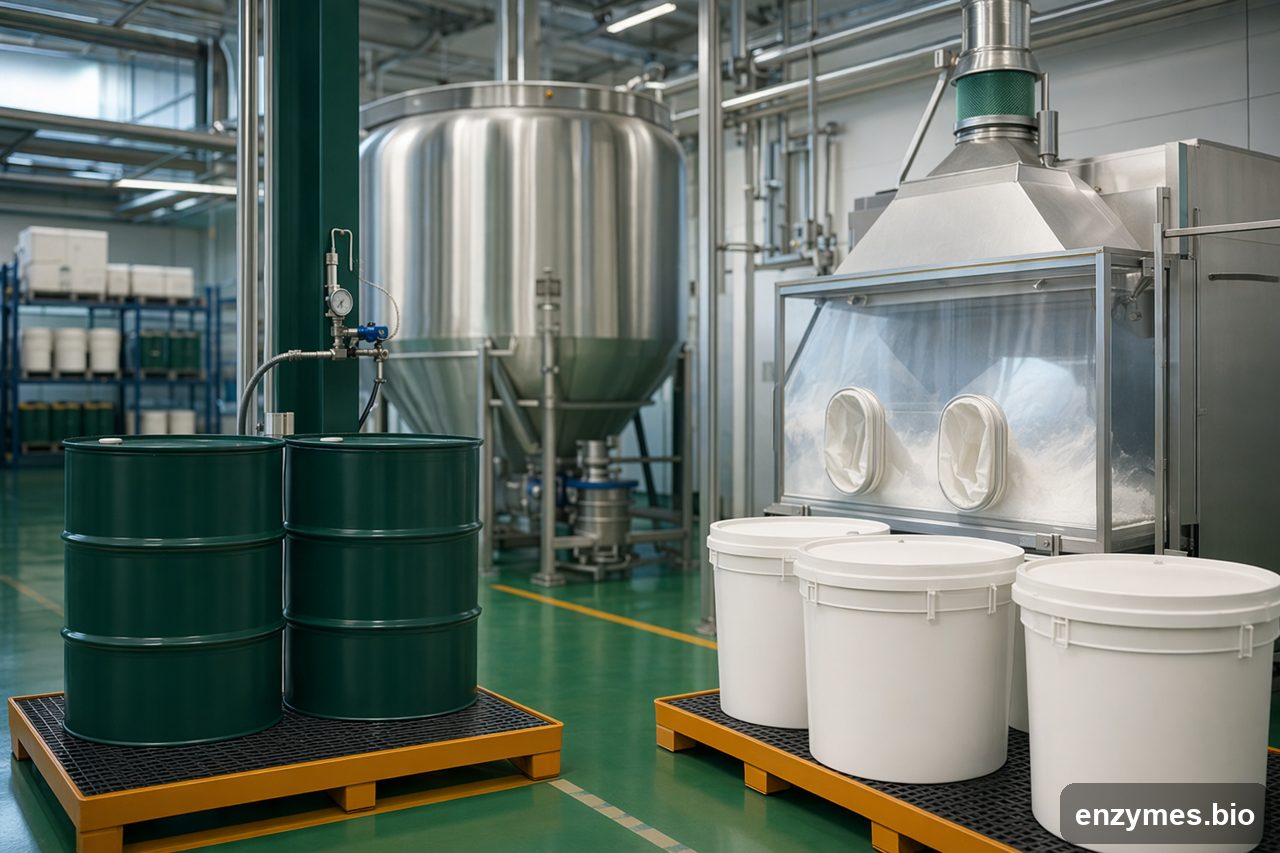
The same enzyme profile can behave differently in manufacturing depending on formulation.
Liquid xylanase may fit when:
The plant already uses liquid dosing skids.
Fast dispersion into process water is required.
Dust control is a priority.
The enzyme is dosed continuously or semi-continuously.
Powder or granulated xylanase may fit when:
Dry blending is part of the process.
Shipping weight and storage footprint matter.
The product must be incorporated into premixes.
Longer ambient storage stability is important.
Formulation questions to ask
Is the material intended for direct dosing, dilution, or premix incorporation?
How does it disperse in cold, warm, acidic, or mineral-rich water?
Is the formulation compatible with the preservatives, acids, salts, or processing aids already used onsite?
What storage conditions protect performance through the intended shelf life?
Are there dust-control, handling, or allergen-management considerations for the plant?
Build a pilot plan that reflects plant reality
A xylanase comparison should not end at bench observation. The pilot should imitate the plant’s bottleneck as closely as practical.
A useful pilot includes
A control with no xylanase to quantify the real baseline.
At least two candidate profiles to separate general enzyme effect from product-specific fit.
A practical inclusion range based on supplier guidance and process economics.
Actual plant raw material from current supply, including normal variability if possible.
The real addition point with matching pH, temperature, solids, and hold time.
Commercial endpoints such as viscosity, filtration time, extract recovery, yield, handling behavior, or product specification.
Downstream checks to confirm the enzyme does not create a new constraint later in the line.
Do not over-optimize a bench trial around conditions the plant will never run. The best pilot is imperfect but honest.
Procurement criteria beyond technical fit
Once a xylanase candidate performs, the buying decision should include supply and compliance factors.
Commercial and documentation checklist
Intended industrial application and market region.
Product form: liquid, powder, granule, or custom blend.
Handling and storage requirements.
Lot-to-lot consistency expectations.
Safety documentation and transport classification.
Food, feed, technical, or processing-aid documentation as applicable.
Packaging format and pallet configuration.
Lead time, minimum order quantity, and forecasted demand.
Change-control expectations for formulation or manufacturing site.
Technical support availability during scale-up.
These details determine whether a technically promising enzyme is also a reliable manufacturing input.
Common selection mistakes
Mistake 1: Comparing xylanases only by label strength
A single paper specification does not describe substrate access, process compatibility, side activity profile, formulation behavior, or plant economics.
Mistake 2: Testing on the wrong substrate
Generic substrates can be useful for screening, but they do not replace your real wheat bran, corn fiber, pulp, biomass, meal, or mixed stream.
Mistake 3: Ignoring the enzyme addition point
Adding xylanase before heat, after pH adjustment, or during hydration can produce very different results.
Mistake 4: Measuring the wrong endpoint
If the plant bottleneck is drainage, do not judge success only by soluble release. If the commercial target is yield, do not stop at viscosity.
Mistake 5: Treating side activities as automatically good
Broader enzymatic action may help in one process and damage another. Define what must remain unchanged.
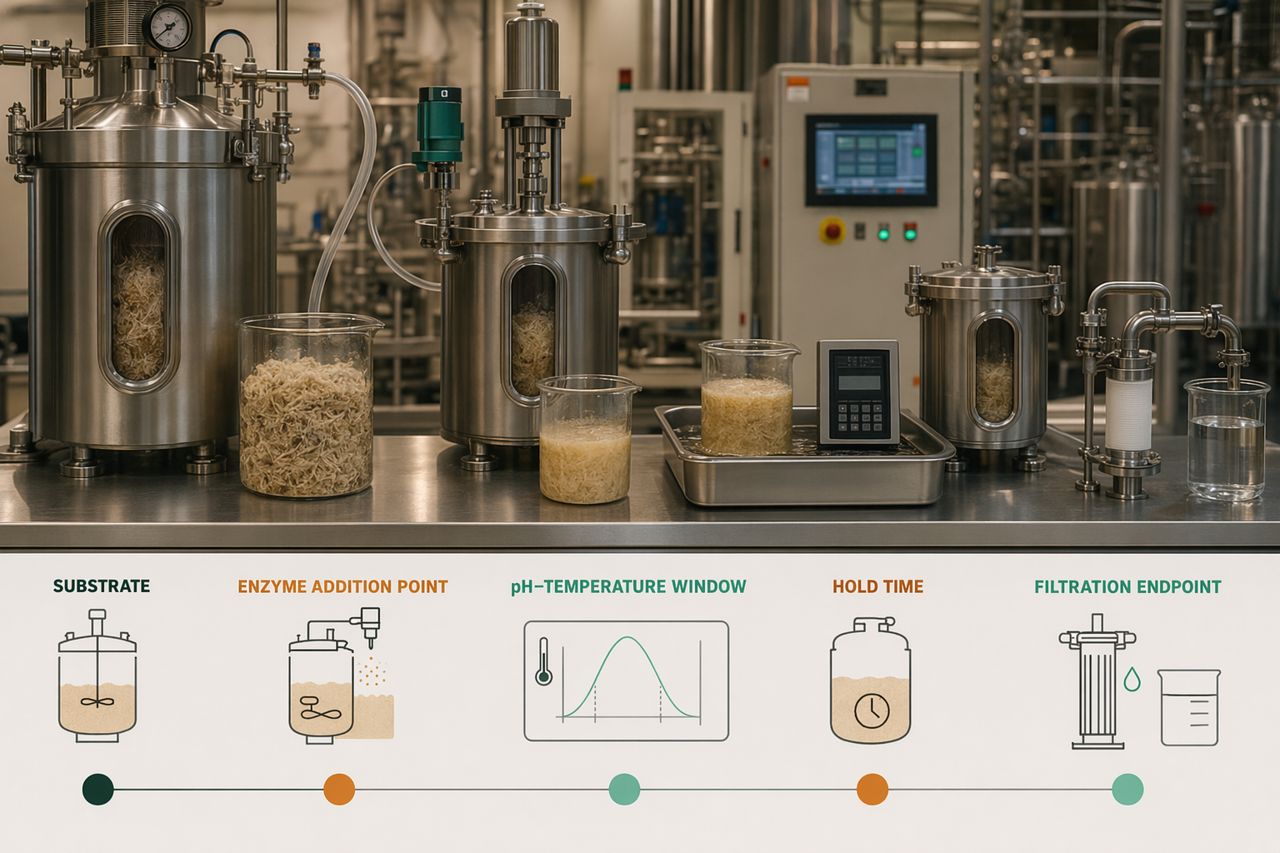
A practical xylanase selection workflow
Describe the substrate — source, pretreatment, solids, variability, and co-components.
Map the process window — pH, temperature, hold time, shear, chemistry, and addition point.
Define the commercial endpoint — viscosity, extraction, filtration, separation, feed conversion, or fiber modification.
Choose candidate profiles — based on application fit, side activity tolerance, and formulation needs.
Run a controlled pilot — with plant material and plant-relevant conditions.
Confirm procurement fit — documentation, packaging, supply continuity, and pricing.
When Hemivane can help
Hemivane is built for buyers who need a technically grounded xylanase decision before committing to scale-up. We can help clarify the right candidate profile for applications involving cereal processing, feed ingredients, biomass conversion, pulp and fiber modification, extraction, filtration, or other xylan-rich plant systems.
Bring us the substrate, operating window, target outcome, and any constraints. We will help translate that into a practical xylanase requirement and a quote path.
Request a quote or get pricing
Use the form below to describe your process. A technical commercial response is most useful when you include substrate type, process pH and temperature range, addition point, target outcome, preferred product form, and estimated volume.