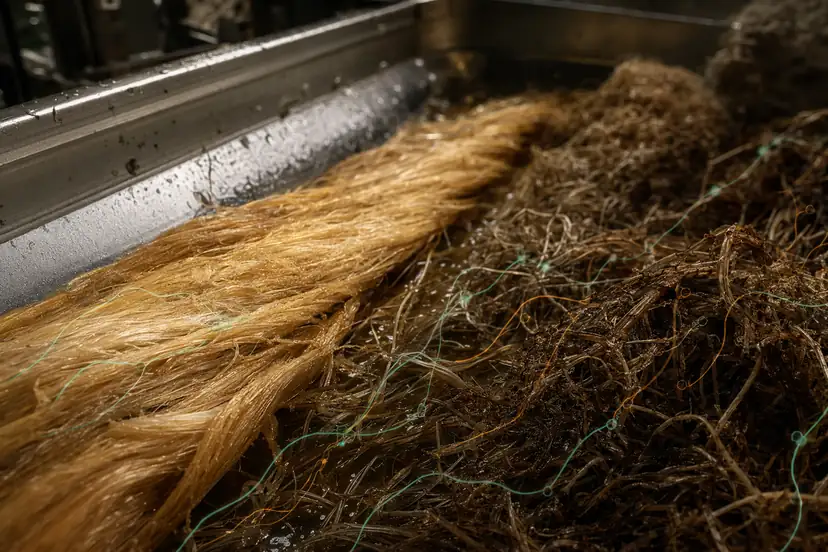
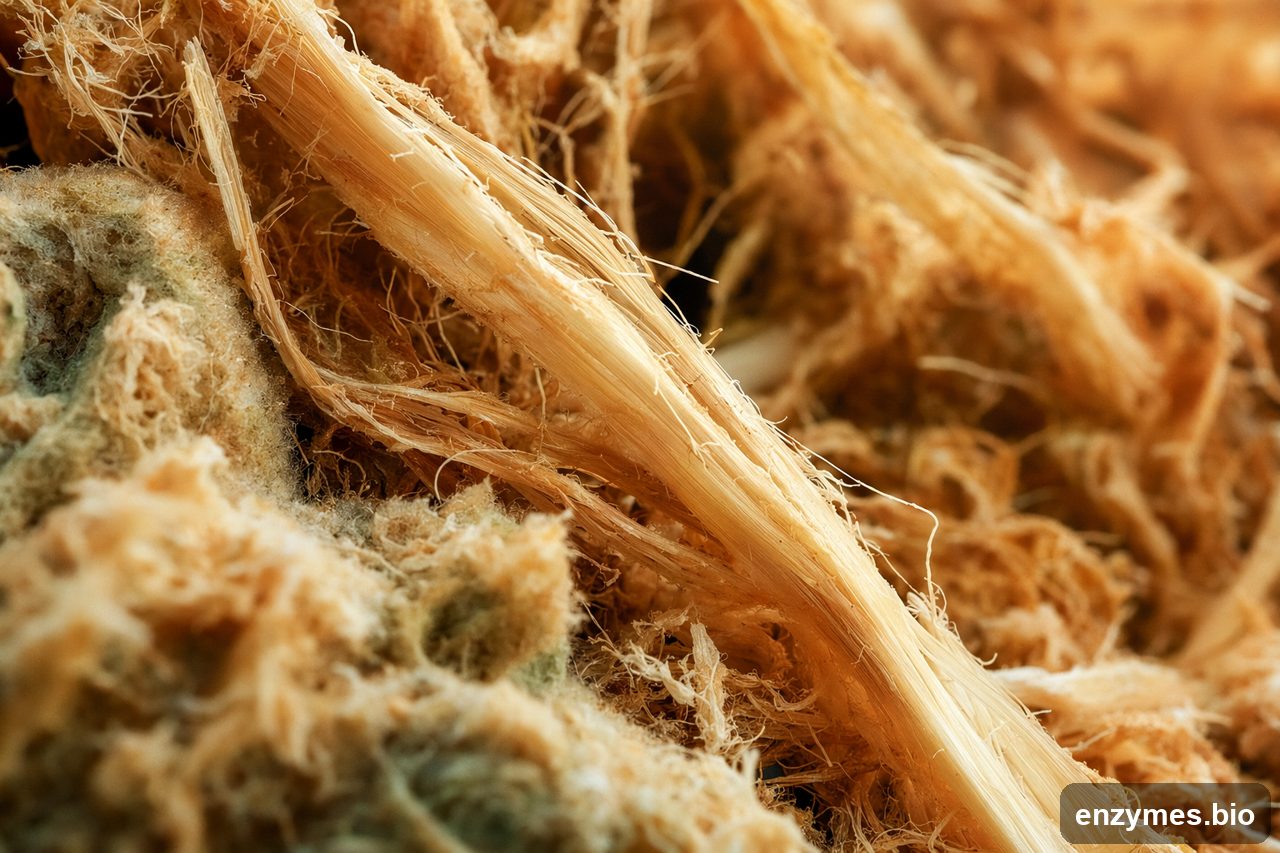
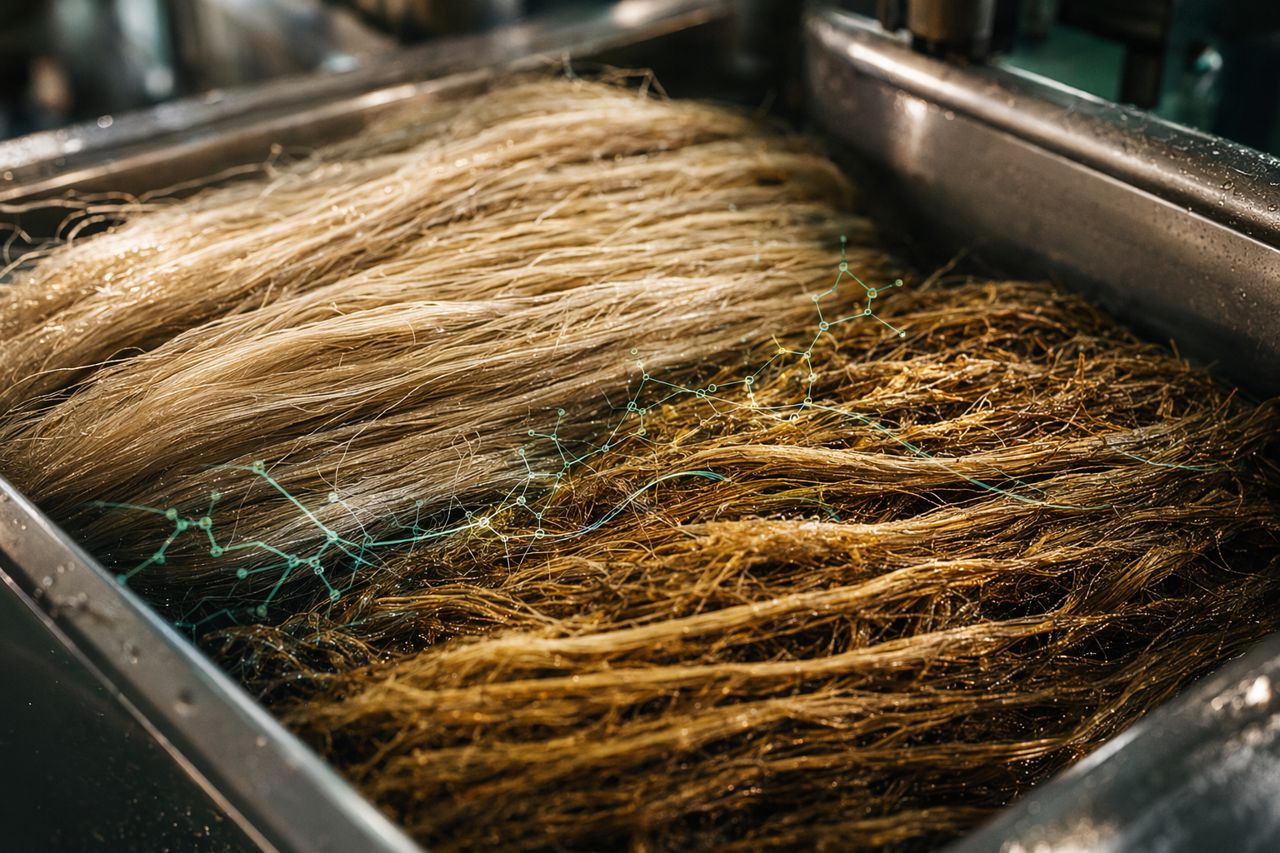
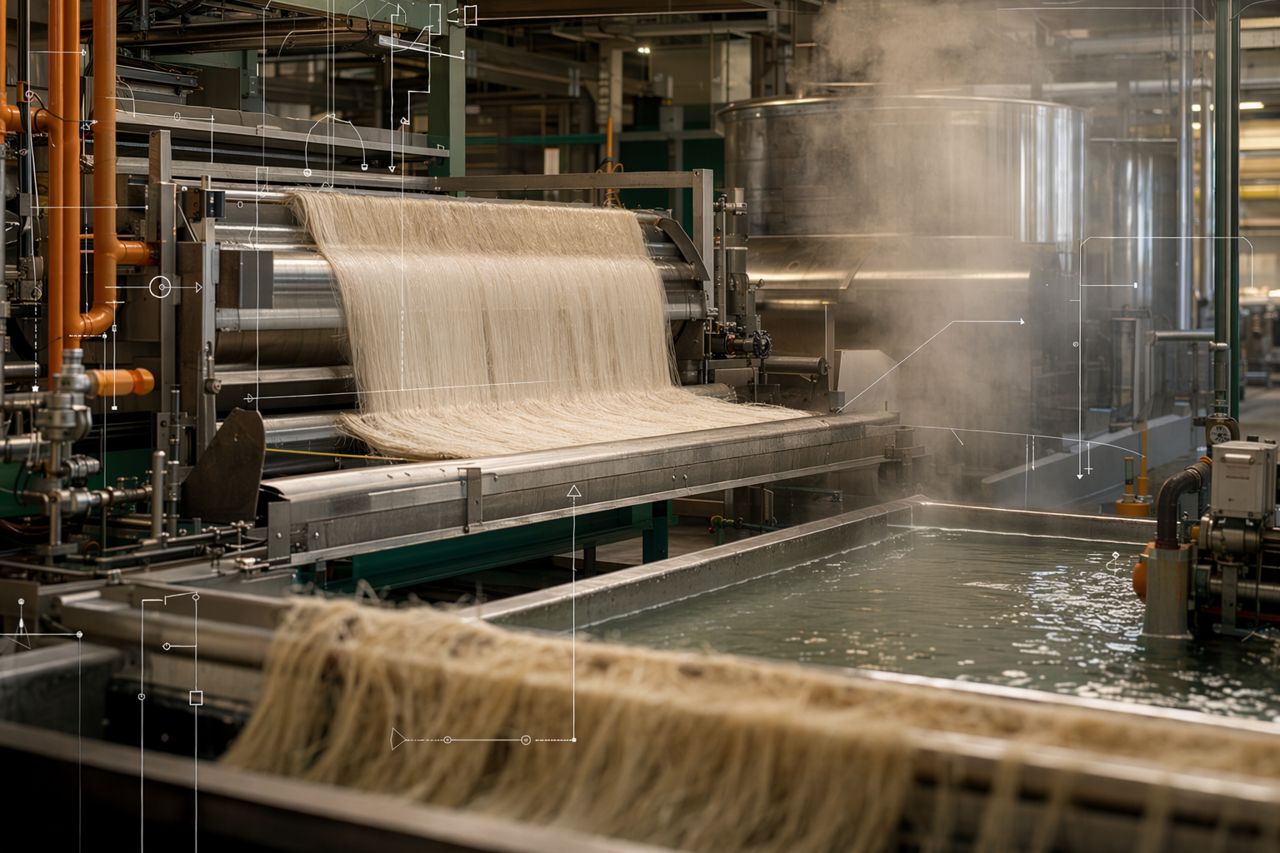
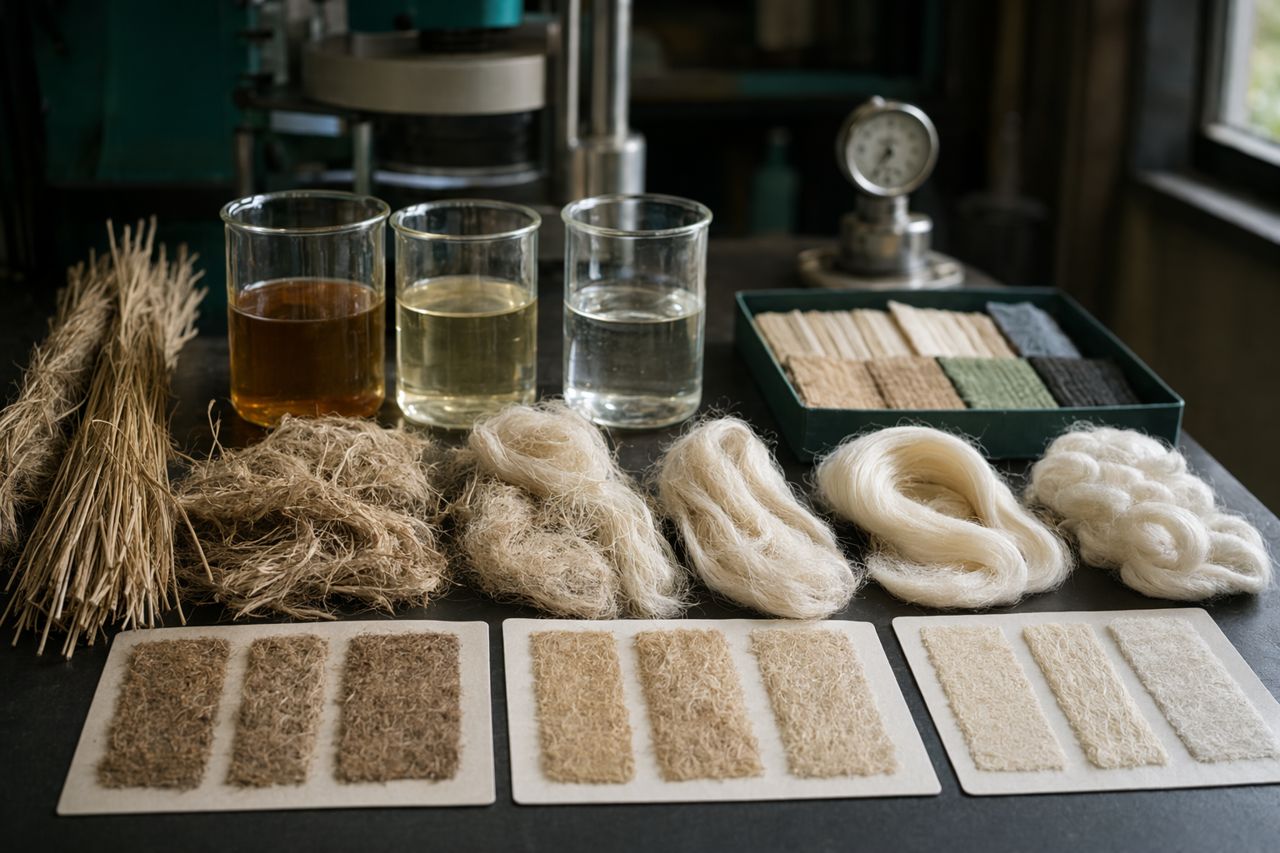
Plant-derived fibers are not just cellulose. Flax, hemp, jute, ramie, sisal, agricultural residues, pulp-derived fibers, and some cotton-rich streams can carry hemicellulose-rich gums, fines, color bodies, pectic materials, waxes, and lignin-associated impurities. Those non-cellulosic components influence handle, wet-out, liquor penetration, washing efficiency, dye preparation, and consistency from lot to lot.
Hemivane supplies Xylanase (endo-1,4-β-xylanase) for manufacturers evaluating enzyme-assisted treatment of natural fibers. The enzyme selectively modifies xylan-containing hemicellulose networks, helping open plant cell-wall structure without making cellulose degradation the objective.
The practical goal is controlled matrix opening: cleaner separation, improved softness, easier downstream chemistry, and better processability under defined plant conditions.
Where xylanase fits in natural fiber operations
Xylanase can be evaluated where hemicellulose limits fiber cleaning, separation, softness, or uniform processing.
Typical application areas include:
Bast fiber preparation for flax, hemp, jute, ramie, and similar long-fiber crops
Retting-assist and degumming trials where controlled loosening of non-cellulosic gums is desired
Scouring support for natural-fiber textiles and blends that contain hemicellulosic impurities
Softening and handle improvement when harshness is linked to plant matrix residues
Pulp-to-fiber preparation for regenerated or specialty fiber streams where xylan-rich residues affect refining, washing, or conversion
Agricultural fiber conditioning for mats, nonwovens, insulation, molded fiber, and bio-composite feedstocks
Xylanase is not a universal replacement for scouring, bleaching, mechanical opening, or formulation chemistry. It is most useful when the process problem is tied to hemicellulose accessibility, fiber bundle cohesion, fines retention, or uneven removal of plant-derived matrix material.
What the enzyme does
Xylanase acts on xylan, a major hemicellulose in many plant cell walls. By opening selected xylan chains, it can reduce the binding effect of hemicellulose in the fiber network. In production terms, this may support:
Easier fiber bundle opening
Better removal of hemicellulosic gums and entrained fines
Improved liquor penetration during wet processing
Softer hand feel after washing or finishing
More consistent downstream bleaching, dyeing, refining, or composite preparation
Reduced reliance on severe chemical conditions in selected process designs
The enzyme should be positioned as a precision aid, not a bulk fiber-digesting treatment. A successful program protects target fiber strength while modifying the fraction of hemicellulose that interferes with the next manufacturing step.
Best-fit substrates
Hemivane xylanase is most relevant for plant-derived materials where xylan is part of the structure or impurity load.
Strong candidates include:
Hemp and flax technical fibers
Jute, kenaf, ramie, and other bast fibers
Cereal-straw fibers and agricultural residues
Hardwood-derived pulp or fiber streams
Natural-fiber nonwoven feedstocks
Cellulose-rich blends that retain plant matrix residues
Molded fiber and bio-composite raw materials where fiber opening affects bonding or forming
Lower-value candidates include highly purified cellulose streams where little accessible hemicellulose remains, or processes where the limiting issue is wax, pectin, lignin, or mineral contamination rather than xylan-containing material.
Process integration guidance
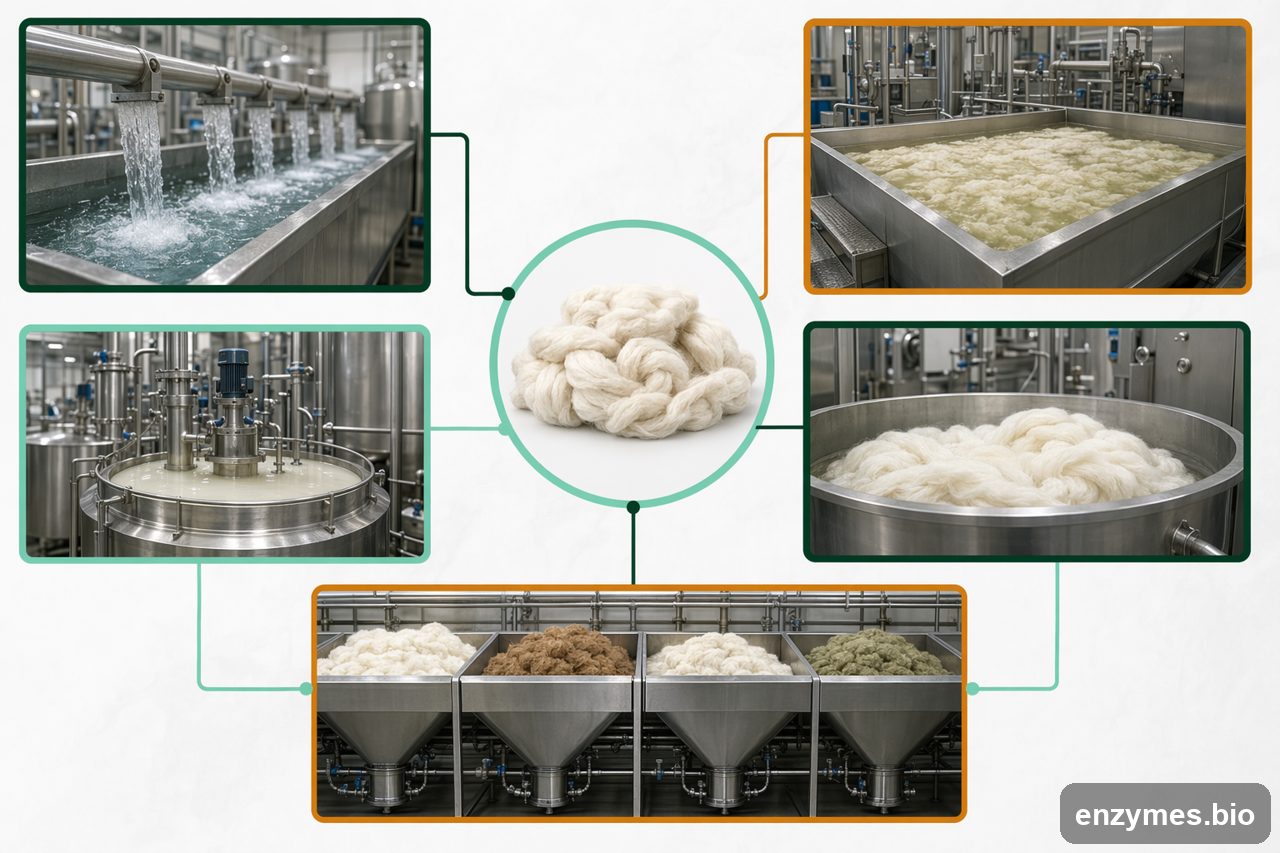
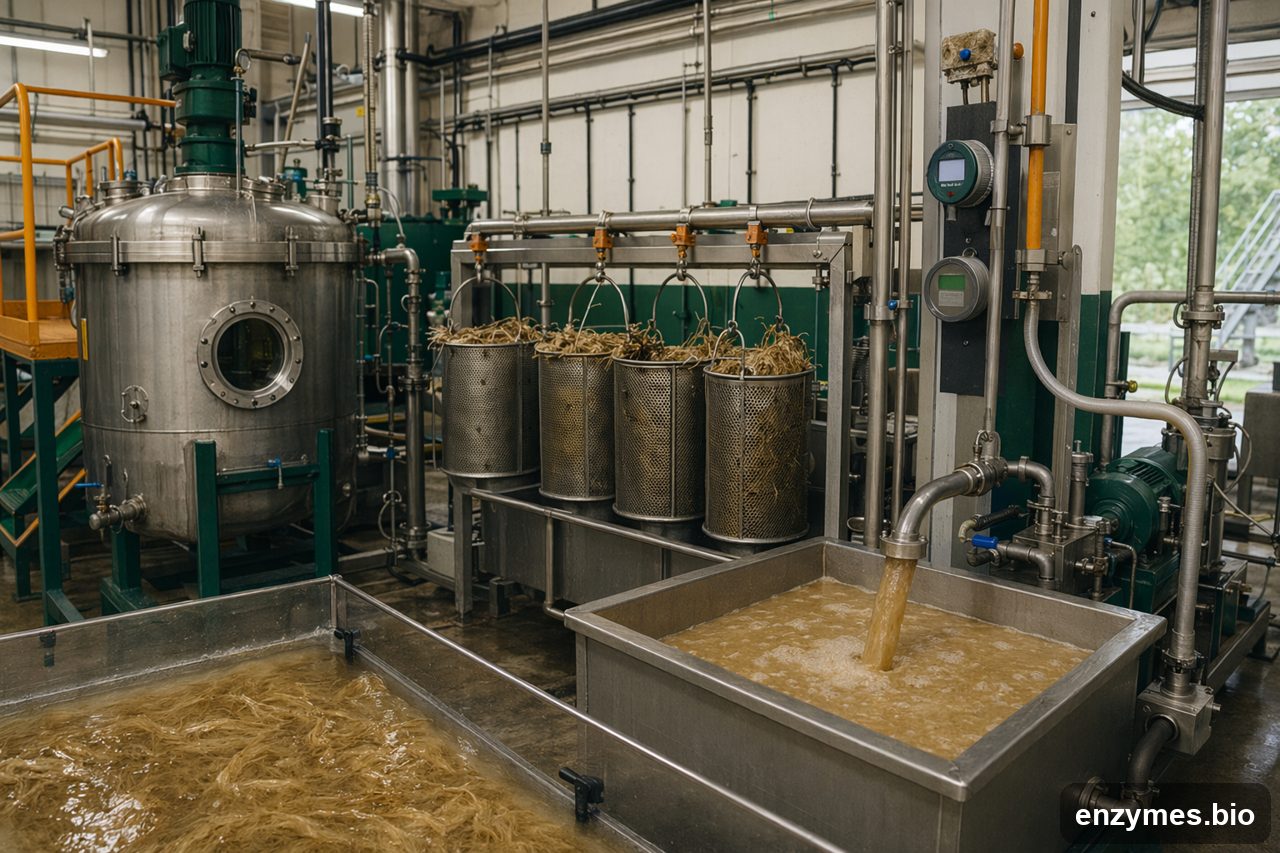
For most mills and fiber processors, xylanase is evaluated as a controlled pretreatment or wet-processing aid. It can be introduced before or alongside washing, scouring, mechanical opening, refining, or finishing steps, depending on the substrate and the quality target.
Thermal profile: enzyme contact stage, ramp behavior, and later enzyme deactivation or wash-out step
Quality limits: tensile retention, brightness, absorbency, weight loss, hand feel, dye uptake, or composite performance
Because natural fibers vary widely by crop, region, retting history, storage, and previous chemical exposure, laboratory screening should be followed by pilot validation under realistic equipment conditions.
Expected manufacturing outcomes
When the substrate and process window are appropriate, xylanase-assisted fiber treatment may help manufacturers achieve:
Cleaner opening of plant fiber bundles
Reduced residual gum character in bast fibers
Softer hand in selected natural-fiber textiles
Improved wet-out and wash efficiency
More uniform preparation for bleaching, dyeing, or finishing
Better dispersion in pulp-derived or composite feedstocks
Lower process severity in selected cleaning or scouring strategies
Improved lot-to-lot process control when raw fiber variability is managed
Results depend on fiber composition, enzyme accessibility, upstream treatment, and downstream requirements. Hemivane supports application screening around practical production targets rather than generic enzyme claims.
What to measure in a trial
A useful xylanase trial should be designed around the manufacturing problem, not only around visual cleanliness.
Recommended evaluation criteria include:
Fiber bundle separation or opening behavior
Residual gum or hemicellulose-associated material
Hand feel and softness after standard finishing
Tensile and elongation retention
Whiteness or brightness response if bleaching follows
Absorbency and wet-out time
Dyeing uniformity where relevant
Filtration, washing, or liquor drainage behavior
Fines generation and fiber loss
Compatibility with existing auxiliaries
Final product performance in textile, nonwoven, pulp, or composite use
The most informative trials compare enzyme-assisted processing against the current mill standard using the same raw fiber lots and downstream finishing sequence.
Compatibility considerations
Xylanase performance is influenced by the surrounding process environment. Before scale-up, confirm compatibility with:
Surfactants and wetting agents
Sequestering agents and metal ions
Peroxide or oxidative stages
Residual caustic, acids, or neutralization chemistry
Preservatives or antimicrobial packages in stored liquors
High-shear mechanical systems
Long hold times before washing or deactivation
If the enzyme is used before oxidative bleaching or high-temperature finishing, the plant should define a clear transition step so the enzyme does its work during the intended window and does not remain active where it is no longer needed.
Formulation and supply notes
Hemivane xylanase is available for B2B evaluation in industrial fiber processing programs. Grade selection depends on substrate, operating pH, temperature profile, contact time, chemical environment, and the desired balance between hemicellulose modification and fiber strength retention.
For procurement and R&D teams, we can support:
Application-fit discussion before sampling
Recommended starting trial architecture
Compatibility review with existing wet-processing chemistry
Pilot-scale evaluation planning
Documentation for handling, storage, and industrial use
Commercial supply discussion for qualified processes
When to choose xylanase
Choose Hemivane xylanase when the process challenge looks like hemicellulose-controlled binding, poor fiber opening, persistent plant gums, uneven wet processing, or excessive harshness after conventional treatment.
Do not choose xylanase as the first tool when the dominant issue is wax removal, pectin-only degumming, lignin color, mineral contamination, or mechanical damage. In those cases, xylanase may still have a role, but it should be tested as part of a broader fiber-treatment system.
Request a quote or application review
If you are evaluating xylanase for natural fiber textiles, bast fiber preparation, pulp-derived fiber, nonwovens, or bio-composite feedstocks, send the substrate details and target outcome. Hemivane will help identify whether xylanase is technically relevant and what a practical trial should measure.